Umbrellas for Traffic Police in India (2026): The CSR & Civic Branding Guide
Every monsoon, at nearly every major traffic signal in Mumbai, Pune, Bengaluru, Ahmedabad and a dozen other Indian cities, you'll spot something that never makes it into official crime statistics or civic budgets: a traffic constable directing four lanes of honking traffic while holding — or, more often, not holding — an umbrella. Somewhere between the whistle, the raised hand, and the lathi tucked under one arm, there simply isn't a free hand left for rain protection. That's the actual, physical problem this article is about, and it's also the reason a very specific kind of Indian CSR tradition exists: corporates, builders, RWAs and trade associations quietly sponsoring branded umbrellas and raincoats for traffic police every year before the rains arrive.
This guide is written for two audiences at once, because they're usually the same people by the time a program actually ships: the CSR or marketing manager evaluating whether a traffic-police umbrella drive is worth doing, and the procurement person who then has to actually spec, price and order the gear. We'll cover why standard promotional umbrellas often fail this specific use case, what to look for instead, what it typically costs, how the sponsorship logistics actually work with a traffic department, and which real, in-stock products from Sky Umbrella's catalog fit the brief.

Table of Contents
- Why Traffic Police Need Different Rain Gear
- The CSR Tradition Behind India's Traffic Police Umbrella Drives
- Case Study: A Composite Manufacturer's Monsoon Sponsorship, Season by Season
- Buying Guide: What to Actually Specify
- Umbrella Specifications That Matter
- Raincoat & Rainsuit Specifications That Matter
- Comparison Table: Umbrella vs Raincoat vs Combo Kit
- Product Picks by Budget and Scale
- Pros & Cons for On-Duty Use
- How to Actually Run a Sponsorship Program
- Who Else Runs Similar Programs
- Expert Tips
- Frequently Asked Questions
- Conclusion
Why Traffic Police Need Different Rain Gear
Most umbrella buying guides — including several of our own — are written around a person walking somewhere: a commuter between a car and an office lobby, a schoolchild between a gate and a classroom, a delivery rider between stops. A traffic constable's monsoon problem is structurally different in three ways.
They don't move, the rain does. A constable posted at a signal junction for a 6–8 hour shift faces rain arriving from every direction as the wind shifts, not a single dash from point A to point B. A canopy that protects well against straight-down rain but folds or inverts the moment wind hits it side-on is close to useless here — which is exactly the failure mode a standard 21-inch two-fold umbrella has in open, unobstructed intersections with no buildings to break the wind.
Their hands are already busy. Whistle in the mouth, one hand raised or signalling, the other often holding a lathi or directing a stalled vehicle — there is frequently no third hand for an umbrella at all. This is the single biggest reason many police departments and their sponsors lean toward hands-free rainwear (a raincoat or rain suit) over an umbrella for actual traffic-duty hours, reserving the umbrella for stationary posts, checkpoints, or handing to a constable between duty rotations.
Visibility is a safety requirement, not a branding preference. A traffic constable in dark clothing under a black umbrella in heavy monsoon rain, low light and spray from passing vehicles is genuinely harder for drivers to see. This is why traffic police raingear the world over trends toward high-contrast colours, and it's a real consideration a sponsor should weigh alongside — not instead of — their own brand colours.
None of this means traffic police can't use a good windproof umbrella well — most sponsorship programs supply both an umbrella and a raincoat, using each where it fits the duty. It does mean the sourcing brief looks different from a standard corporate giveaway, and it's worth writing it down before you order.
The CSR Tradition Behind India's Traffic Police Umbrella Drives
Corporate-sponsored monsoon gear for traffic police is one of the older, quieter CSR traditions in urban India — older than the term "CSR" itself in most cities. Real estate developers, cement and steel manufacturers, insurance companies, local trade bodies and even individual car dealerships have run these drives for years, usually timed to the first heavy spell of the monsoon and coordinated through a city's traffic police headquarters, a zonal DCP's office, or a local Rotary/Lions club acting as intermediary.
The commercial logic is straightforward and doesn't need dressing up: a branded umbrella handed to, and visibly used by, a traffic constable at a major junction near a company's project site, showroom or branch office is a piece of hyper-local, sustained outdoor visibility that a hoarding at the same spot would cost many times more to buy — and it carries genuine local goodwill that paid advertising doesn't. It also, unlike most CSR spends, solves an actual daily discomfort for a specific, identifiable group of public servants, which is part of why local press and civic social media accounts tend to cover these handover events without being asked.
The trade-off is that this isn't a plug-and-play promotional-umbrella order. It typically requires a courtesy approach to the traffic department (sometimes a formal letter, sometimes just a conversation with a friendly inspector), some flexibility on colour and branding placement, and a realistic timeline — most departments want the gear in hand well before the first heavy spell, not after it.

Case Study: A Composite Manufacturer's Monsoon Sponsorship, Season by Season
To make this concrete without inventing a specific named company, here's an illustrative composite drawn from how these programs typically run in a mid-sized Indian city, built from the pattern several genuine corporate CSR drives of this kind actually follow.
A building-materials manufacturer with a large plant on a city's outskirts had, for years, run a generic corporate-gifting order every Diwali and left it at that. In their fourth year of operating locally, a plant manager noticed the same handful of traffic constables getting drenched every single evening at the junction outside their factory gate — the same junction their own trucks used dozens of times a day. The company reached out to the local traffic inspector, confirmed headcount for that post (14 constables across three shifts, rotating with two neighbouring junctions), and placed a modest order: windproof golf umbrellas in the department's preferred colour with the company name on one panel and "Traffic Police" left prominent on the others, plus a smaller batch of rain suits for the constables working the exposed junction directly outside the plant.
The gear was handed over roughly three weeks before the first heavy monsoon spell, at a short event the local traffic office organised itself, which a local newspaper covered without being invited. The following year the company repeated the order, added two more junctions along its trucking route at the inspector's suggestion, and folded the annual cost into its existing CSR line item rather than treating it as a one-off. Total spend across roughly 40 units of umbrellas and rain suits, at the bulk pricing bands covered below, ran a small fraction of a single billboard booking for the same junction — with a duration (one full monsoon season, repeated annually) no billboard contract matches.
The lesson generalises well beyond building materials: any business whose customers, trucks, or foot traffic already pass a specific junction daily has a natural, low-cost, high-goodwill sponsorship opportunity sitting at that junction already.
Buying Guide: What to Actually Specify
Before requesting quotes, a sponsor should be able to answer five questions — most departments will ask at least the first three anyway.
1. How many constables, across how many shifts and junctions? This determines quantity and whether you need one set per constable or a shared pool per post (departments often prefer the latter, since gear left in a post's guard booth outlasts gear issued to an individual who transfers).
2. Umbrella, raincoat, or both? As covered above, hands-free duty argues for rainwear; stationary posts and checkpoints suit an umbrella well. Most programs that can afford it do both.
3. Whose branding rules apply — yours or the department's? Many traffic departments have an informal expectation that "Traffic Police" or the department's own name/crest remains the most prominent element, with the sponsor's branding on a secondary panel or the handle area. Confirming this before finalising artwork avoids a reprint.
4. What's the realistic delivery window? Bulk custom printing has lead time — see our printing methods guide for how screen, digital and heat-transfer timelines differ — and departments will want gear in hand before the season starts, not mid-drench.
5. What's the actual annual budget line? A modest, repeatable annual order (see the case study above) tends to build a much better relationship with a department over years than a single large one-off that isn't repeated.
Umbrella Specifications That Matter
For an umbrella that will actually be used at an open junction rather than left in a guard booth, three specifications matter more than they do for a typical office-gifting order.
- Rib count and frame material. More ribs generally means more structural resistance to gusting, cross-directional wind — the kind an open intersection produces far more than a tree-lined street does. Our frame materials guide covers why fibreglass ribs flex and recover under gusts rather than snapping, which matters more here than the marginal weight saving of a cheaper frame.
- Canopy diameter and double-layer venting. A vented, double-canopy design (letting wind pass through rather than catching under the canopy like a sail) reduces the classic "turned inside out" failure. A wider canopy also means a wider branding surface, which is the whole point of a sponsorship order.
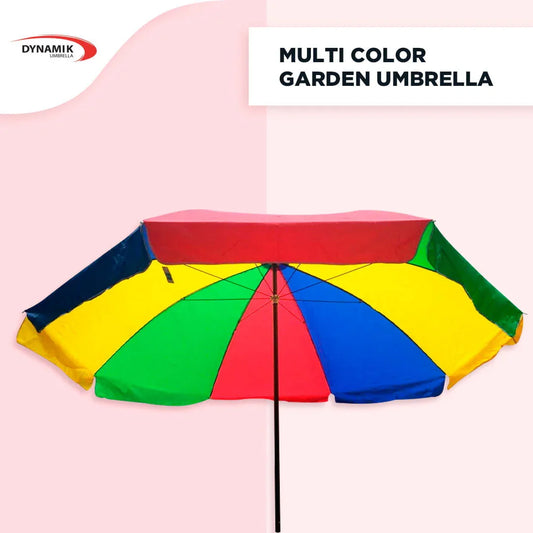
- Colour. Confirm with the department first, but bright, high-contrast colours (yellow, orange, white) genuinely help visibility in low-light monsoon conditions and are frequently what departments prefer over dark corporate colours for this specific use, even when the sponsor's own branding uses navy or black elsewhere.

Raincoat & Rainsuit Specifications That Matter
Where hands-free duty rules out an umbrella, a two-piece rain suit (jacket and pant, not a poncho) is the practical standard, for reasons that come up in every serious sourcing conversation with a department.
- Two-piece over poncho. A jacket-and-pant set lets a constable move both legs freely to step into traffic, unlike a poncho that restricts leg movement and can catch on a vehicle mirror or a two-wheeler.
- Water-penetration rating. Look for a stated water-penetration figure rather than a vague "waterproof" claim — our WeatherWise Signature Rain Suit publishes a tested 508cm rating, which is the kind of number worth asking any supplier for directly rather than taking on faith.
- Size range and fit. Constables wear the suit over a uniform, sometimes with a duty belt and radio clipped on, so a suit that only fits true-to-size street wear will fit badly in practice. Confirm the full size range — the WeatherWise range here runs L through 2XL — before ordering a single size for the whole department.
- Reflective elements where available. Sky Umbrella's own Mix & Match Monsoon Kits program includes a "Rider Set" option with an optional reflective-tape upgrade, built originally for delivery and field teams but directly applicable to a traffic-duty brief — worth specifying if visibility is a stated priority for the department.

Comparison Table: Umbrella vs Raincoat vs Combo Kit
| Format | Best for | Typical bulk price/unit | Key limitation |
|---|---|---|---|
| Windproof umbrella only | Stationary posts, checkpoints, shift-change carry | ₹190–450 | Occupies one hand — not ideal for active signal duty |
| Two-piece rain suit only | Active signal/intersection duty, both hands needed | ₹899–1,599 | No shade on dry, hot days; heavier to carry when not raining |
| Combo kit (umbrella + rain suit) | Full-shift coverage across post types, most CSR programs | ₹1,100–1,900 combined | Higher per-constable cost; needs storage at the post |
| Budget bulk umbrella (2-fold, unbranded frame) | Very large headcount, tight budget, shared-pool use | ₹90–190 | Lower wind resistance; better suited to booths than open junctions |
Product Picks by Budget and Scale
Real, currently available products from our own catalog, organised by where they fit a traffic-police sourcing brief.
Premium / flagship post umbrella — Classic Premium Windproof Umbrella (₹1,599): a 27-inch canopy with 16 reinforced ribs, built for exactly the kind of sustained heavy-wind exposure an open junction produces. This is the umbrella for a headline post — a major signal outside a corporate campus or a VIP route — where the sponsor wants a single, high-quality unit that lasts multiple seasons rather than a large disposable batch.
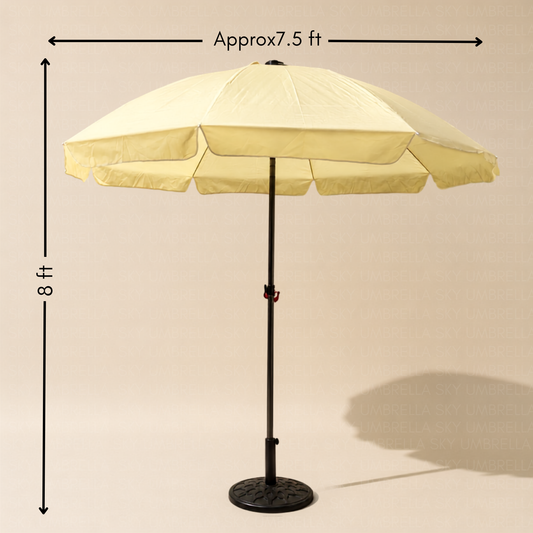
Wide-coverage bulk umbrella — Double Layer Golf Umbrella (₹350–450): the 30-inch double-vented canopy is the closest match to the "wind resistance plus wide branding panel" brief most sponsors are actually chasing, and its price band works for a multi-junction order across a department.
Standard bulk umbrella — Promotional Golf Umbrella (₹190–250): a 27-inch canopy at a lower price point, suited to programs covering more junctions on a tighter per-unit budget.
Budget shared-pool umbrella — Promotional 2-Fold Umbrella (₹90–120, sizes 21″/24″/27″): the most economical option in the catalog, best suited to a shared pool kept at a guard booth rather than an individually issued unit, for departments and sponsors covering a very large number of posts on a fixed budget.
Compact carry umbrella for shift changes — 3 Fold Auto Open & Close Umbrella (₹250–350): auto open-and-close makes this the practical choice for the walk between a constable's transport and their post, rather than for the duty itself.
Standard-duty rain suit — WeatherWise Leo Rain Suit (₹899, sizes L–2XL): the entry point into genuine two-piece hands-free rainwear, and the most common single choice for a department-wide order.
Higher-durability rain suit — WeatherWise Scorpio Rain Suit (₹1,499, sizes L–2XL): a step up in build quality for departments or sponsors who want a single suit to last multiple monsoon seasons of daily outdoor wear rather than replacing suits annually.
For programs planning to combine an umbrella and a rain suit per constable, our Mix & Match Monsoon Kits page lets you configure exactly that combination — umbrella, rainwear and add-ons — as one coordinated order rather than two separate ones, which is usually simpler for both the sponsor's procurement team and our production side.
Pros & Cons for On-Duty Use
Umbrella — Pros: lower cost per unit, works equally well on hot sunny days for shade, no sizing needed, easy to store at a post. Cons: occupies one hand, vulnerable to gusting wind at open junctions, less effective once a constable is actively directing traffic rather than standing still.
Two-piece rain suit — Pros: both hands and legs stay free for actual duty, far better protection in sustained heavy rain, can include reflective elements for low-light visibility. Cons: higher per-unit cost, needs correct sizing across a department, no use on dry days, bulkier to carry when not raining.
How to Actually Run a Sponsorship Program
Most first-time sponsors overthink the bureaucracy and underthink the timeline. In practice, the steps are usually:
- Identify the junction(s) or post(s) that matter to your business — typically the one nearest your office, plant, project site or a route your vehicles use daily.
- Make contact through the local traffic inspector or the zonal DCP's office, either directly or via an intermediary like a local Rotary/Lions chapter, RWA federation, or trade association that already has a relationship with the department.
- Confirm headcount, shift pattern, and the department's colour and branding preferences before finalising artwork — this single step avoids the most common reprint.
- Place the order with enough lead time for custom printing and delivery well before the first heavy monsoon spell — see our pre-monsoon gifting timing guide for why April–May is the realistic window most years, not June.
- Coordinate a simple handover — most departments are happy to organise this themselves once gear is ready, and it's usually the only "event" the program needs.
- Budget for an annual repeat, folded into the same CSR line item, rather than treating it as a one-time PR exercise — the goodwill and visibility compound with repetition in a way a single large order doesn't.
If your organisation is new to bulk umbrella branding generally, our corporate gifting mistakes guide and branding cost breakdown are worth reading before finalising a quote with any supplier, including us.
Who Else Runs Similar Programs
Traffic police are the most visible recipients of this kind of sponsorship, but the same sourcing logic applies to several adjacent groups sponsors often add to the same order once the program exists:
- Housing society and campus security guards — RWAs and corporate campuses routinely run a smaller-scale version of exactly this program for their own gate and perimeter security staff.
- Municipal sanitation and civic maintenance staff — another outdoor, uniformed workforce with near-identical rain-gear needs.
- Government tender-based bulk supply — some departments procure this gear through formal tenders rather than CSR donation; see our government tender playbook if that's the route your organisation is approaching this from.
- Political and civic campaign distribution — a related but distinct use case covered in our election campaign umbrellas guide, aimed at voter-facing distribution rather than on-duty personnel.
Expert Tips
A few things that only become obvious after running one of these programs for a season or two: order roughly 10–15% more units than your headcount count suggests, since gear gets left in transferred constables' lockers or damaged faster than office umbrellas do; ask the department directly whether they'd prefer umbrellas, rain suits, or a specific mix rather than assuming — departments have strong, specific preferences based on what's failed for them before; and photograph the actual handover for your own CSR reporting, since this is one of the few CSR line items that produces genuinely usable, non-staged photography.
Frequently Asked Questions
Do we need permission from the traffic police department before donating branded gear?
Yes, in practice — even where no formal permission process exists, department preferences on colour, branding placement and prominence should be confirmed before printing, since re-doing artwork after a batch is printed is the single most expensive mistake in this category.
Can our company logo be the most prominent branding on the umbrella?
Usually not, and it's worth not pushing for it — most departments expect "Traffic Police" or their own department name/crest to remain the most visible element, with sponsor branding on a secondary panel or the handle.
Is a raincoat or an umbrella the better choice if we can only afford one?
For constables on active signal duty, a two-piece rain suit is generally more useful since it keeps both hands free; for stationary posts and checkpoints, a windproof umbrella works well and costs less per unit.
How far in advance should we place the order?
Aim for delivery at least three to four weeks before the first expected heavy monsoon spell in your city, which usually means finalising the order in April or May — see our pre-monsoon timing guide linked above.
Can we combine this with our regular corporate umbrella gifting order?
Yes — many sponsors place their traffic-police order alongside their regular client and employee gifting order in the same production run, which can improve pricing on both. Our corporate umbrella manufacturing page has more on running combined bulk orders.
What if our city's traffic department already has a sponsor for our target junction?
This happens, and most departments are receptive to either adding a second sponsor for a nearby junction or rotating sponsorship annually — ask directly rather than assuming exclusivity.
Conclusion
A traffic-police umbrella and rainwear program is one of the rare CSR ideas that's simultaneously cheap, genuinely useful to the people receiving it, and naturally visible to exactly the local audience most businesses actually want to reach — without needing a media buy, an agency, or a large budget to get started. The sourcing brief is different from a standard promotional umbrella order in three specific ways — wind resistance, hands-free rainwear, and visibility — and getting those three right matters more than the branding artwork does.
If you're evaluating this for the first time, start small: one junction, one department contact, a modest first order. The programs that last for years almost always started that way.
Ready to Source Your Traffic Police Monsoon Kit?
Contact our corporate team for bulk pricing on windproof umbrellas and WeatherWise rain suits, or use our Mix & Match Monsoon Kits configurator to build a combined umbrella-and-rainwear order sized to your department's headcount. For questions on branding approval, timelines or sizing, reach us directly via our Contact Us page.