The Real Cost of Umbrella Branding: A Screen-Printing Setup and Plate Charge Breakdown for First-Time Buyers
If you have ever asked three umbrella suppliers for a quote and received three wildly different numbers for what looks like the same product, you are not alone. It is one of the most common frustrations we hear from procurement teams, HR departments, and marketing managers ordering branded umbrellas for the first time. One quote seems reasonable, another has a mysterious “setup charge” line item that doubles the total, and a third simply says “request formal quote” without explaining why.
This confusion is not a vendor trying to trick you. It comes down to a handful of real production variables that most buyers have never had explained in plain language. This guide breaks down what goes into the price of a branded umbrella, what a screen or plate setup charge actually is, and how order quantity, print complexity, and timeline change your effective cost per piece. By the end, you will know exactly what you are paying for in any umbrella quote.
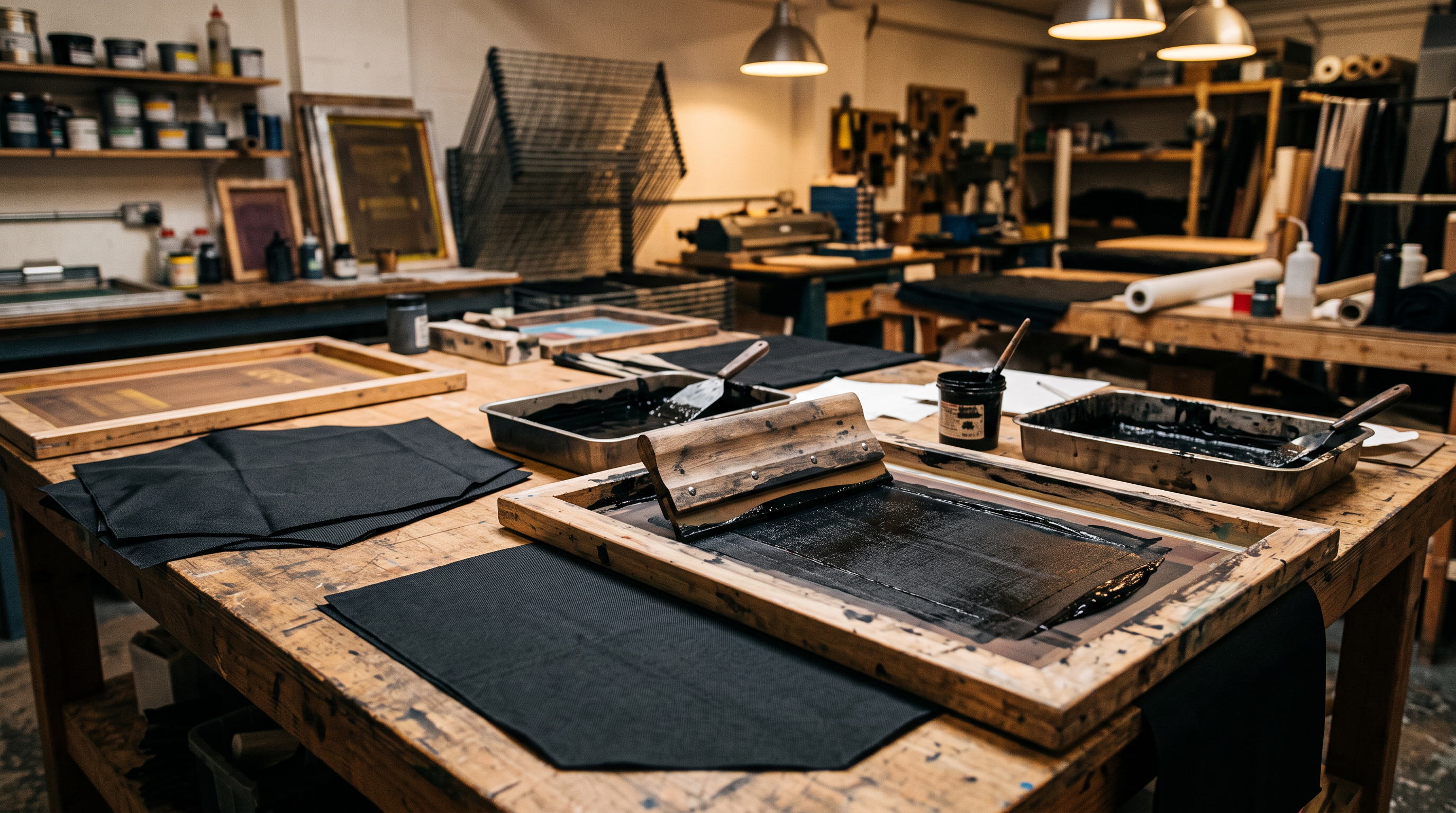
Table of Contents
- Why Umbrella Quotes Vary So Much Between Vendors
- The Core Factors That Drive Per-Piece Price
- What Is a Screen or Plate Setup Charge, Really?
- How Order Quantity Changes Your Effective Cost Per Piece
- Single-Color vs Multi-Color, Single-Panel vs Multi-Panel Printing
- Lead Time and Rush-Order Cost Impact
- Illustrative Cost Comparison Table
- Example Product: 2 Fold Promotional Umbrella – 27”
- A Realistic Example: Planning a Bulk Order
- Checklist for Requesting an Accurate Quote
- Frequently Asked Questions
- Conclusion
1. Why Umbrella Quotes Vary So Much Between Vendors
When two quotes for what looks like an identical umbrella come back at very different prices, it is almost never because one vendor is simply cheaper across the board. In our experience, the gap usually comes from a mismatch in what is actually being compared.
First, the base umbrella itself may not be equivalent. A vendor quoting a lower price may be using a lighter-gauge frame, a thinner or non-UV-coated fabric, or a smaller canopy diameter. These differences are not always obvious from a spec sheet, but they show up in how the umbrella performs in monsoon conditions and how long it lasts as a corporate gift.
Second, printing complexity is rarely quoted like-for-like unless you specify it. One supplier might assume a single-color logo on one panel, while another assumes multiple colors across several panels, and that difference alone can change the price meaningfully.
Third, and this is what confuses most first-time buyers, the screen or plate setup charge is sometimes a separate line item and sometimes folded into the per-piece price. Comparing a quote that itemizes setup against one that bundles it makes the numbers look mismatched even when the underlying cost structure is similar.
Finally, quantity and lead time assumptions differ. A quote based on a smaller trial order will look more expensive per piece than one based on a large bulk order, and a vendor assuming a standard timeline will quote differently than one who has padded in a rush fee.
The practical takeaway: the umbrella “price” you see is a bundle of several separate cost components. Once you understand each one, comparing vendors becomes far easier, and you stop comparing apples to oranges.
2. The Core Factors That Drive Per-Piece Price
Every branded umbrella quote is built from a set of variables that combine into the final per-piece number. Understanding each one helps you ask sharper questions and spot where a quote might be cutting corners.
Canopy Size
Larger canopies use more fabric and offer more usable print area, affecting material cost and design layout across panels. A larger canopy also tends to need a slightly larger frame and shaft.
Frame Material
Rust-resistant metal ribs and a sturdy shaft hold up to repeated folding and monsoon wind gusts far better than budget alternatives, and this shows up in the base cost before any branding is added.
Fabric Grade
Waterproof polyester pongee with UV coating performs differently from thinner, uncoated fabric, both in water resistance and in how sharp the printed logo looks over time. Cheaper fabric can also affect how well ink adheres.
Fold Type
Two-fold, three-fold, and straight umbrellas each have different frame mechanics and manufacturing steps, which affects base pricing before printing is even considered.
Number of Print Colors
Each additional ink color typically requires its own screen or plate in traditional screen printing. More colors generally mean more setup work.
Number of Print Panels
Printing on just one canopy panel is simpler than printing across multiple panels, since each panel may need its own alignment and setup.
Order Quantity and MOQ Tiers
This is one of the biggest levers on effective per-piece cost. Setup charges are largely fixed regardless of quantity, so spreading that cost across more units brings the per-piece cost down. Most suppliers set MOQs precisely because very small runs make the setup-to-unit-cost ratio unfavorable.
Rush or Expedited Lead Time
Compressing a normal timeline into a rush schedule often means extra shifts or expedited sourcing, which typically carries a surcharge.
Taken together, these factors explain why a “custom umbrella” query without specifics is nearly impossible to price accurately over email, and why exact rupee figures for setup and plate charges are not something we will invent here, since they genuinely vary by vendor, printing method, and order size. What we can do is make sure you understand what drives them, so that when you request a formal quote, you know what to ask about.
3. What Is a Screen or Plate Setup Charge, Really?
A screen or plate setup charge is a one-time production cost tied to preparing the printing equipment for your specific artwork, before a single umbrella is printed. In traditional screen printing, each color generally requires its own screen or plate, which has to be prepared, aligned, and tested before the print run starts.
Think of it as “tooling up” for your exact logo. Once the screens are ready, printing the first umbrella and the five-hundredth use the same setup, which is why this charge is typically billed once per order rather than per piece. The more units printed using that setup, the smaller the effective setup cost becomes per piece, since that fixed cost gets amortized, or spread out, across a larger batch.
This is also why reordering the same design later can be more cost-effective than starting fresh, since some suppliers retain screen information for repeat orders, though this varies by vendor and time elapsed.
A few things are worth understanding conceptually, without attaching invented numbers to them.
Setup charges generally scale with the number of colors and panels in your design, since more colors or panels can mean more screens and more setup steps.
Setup is a one-time charge per unique design, not a recurring cost per piece, though it is sometimes shown as a blended per-piece line rather than broken out separately.
The exact setup or plate fee depends heavily on the vendor’s printing method and how they structure pricing, which is why two genuine quotes for a similar umbrella can look very different even when the umbrella and design are comparable.
Because of this variability, the only responsible advice is to always request a formal, itemized quote rather than relying on a rough estimate. Ask specifically whether the setup or plate charge is itemized separately or already built into the per-piece price, since that single question resolves most of the confusion buyers run into.
4. How Order Quantity Changes Your Effective Cost Per Piece
Because setup is largely a fixed, one-time cost, order quantity has an outsized effect on your effective cost per piece. This is the single most useful concept to internalize before you request quotes.
Picture a fixed setup cost spread across different order sizes. At a small quantity, that cost divided across fewer units adds a noticeably larger amount to each piece. At a larger quantity, the same cost divided across many more units adds only a small amount per piece. The umbrella itself does not get dramatically cheaper to manufacture at scale, but the setup portion of your cost shrinks as volume increases.
This is also why suppliers structure pricing in tiers rather than a single flat rate, with the per-piece price stepping down at higher tiers. For a product like the 27-inch 2 fold promotional umbrella, the quoted range of ₹190 to ₹250 per piece reflects this kind of quantity-based tiering, with the lower end typically associated with larger volumes.
A practical implication: if you are planning multiple orders over a year, for example one batch for a conference and another for client gifting, it is worth asking whether combining those into a single larger order, even with staggered delivery, could bring your average cost down by amortizing setup once rather than twice.
5. Single-Color vs Multi-Color, Single-Panel vs Multi-Panel Printing
Two of the biggest levers on both setup complexity and print cost are how many ink colors your logo uses and how many canopy panels carry printing.
Color Count
A single-color logo, for instance a solid navy wordmark, is the simplest and most economical to set up, since it typically needs only one screen. A two-color logo needs a second screen, precisely registered to the first, and each additional color compounds this. Gradient or photographic-style logos are usually the most complex to reproduce in screen printing.
If your brand guidelines allow any flexibility, a clean single-color or two-color logo will almost always be more cost-efficient to print at scale than a four- or five-color version, without necessarily sacrificing recognition.
Panel Count
An umbrella canopy is made of multiple triangular panels stitched together. Printing on just one panel, centered on the canopy, is the most straightforward approach. Printing across two or more panels, for a wraparound effect, adds complexity because each panel may need its own alignment pass.
On a 27-inch canopy like the one used as the example product here, the print area is large enough that even a single-panel, single-color print can look bold and highly visible, since this size sits at the upper end of the 2 fold range specifically because it maximizes usable logo real estate. In many corporate gifting and conference giveaway scenarios, a well-placed single-panel print on a large canopy delivers excellent visibility at lower production complexity than a multi-panel, multi-color design.
A Practical Tradeoff List
Single-color, single-panel: lowest setup complexity, most budget-friendly, works well on a large canopy where the logo still reads clearly from a distance.
Two-color, single-panel: slightly higher complexity, useful when your logo has two brand colors that need to appear together.
Single-color, multi-panel: moderate complexity, good for visibility of a simple wordmark from multiple angles.
Multi-color, multi-panel: highest complexity and cost impact, best reserved for flagship campaigns where visual impact matters more than unit economics.
6. Lead Time and Rush-Order Cost Impact
Standard production timelines let a supplier slot your order efficiently, source fabric normally, and run quality checks without compressing any step. Rush orders disrupt that flow, so a supplier typically has to reprioritize production or expedite sourcing, which generally shows up as a surcharge on your quote.
The size of that surcharge depends on how compressed the timeline is, how large your order is, and the supplier’s current production load. A modest reduction in lead time might carry a small premium, while an aggressive rush, especially in the run-up to monsoon months, can carry a more significant one.
The most reliable way to avoid rush charges is to plan ahead. If you have a conference, product launch, or gifting cycle coming up, requesting quotes well before the lead time window closes gives you access to standard pricing and more flexibility on design revisions. First-time buyers often underestimate how much lead time artwork approval and sampling take, so building in buffer time is one of the simplest ways to control cost.
7. Illustrative Cost Comparison Table
The table below is illustrative only, using relative terms rather than invented figures for setup charges, since those vary by vendor and must be confirmed through a formal quote. The per-piece price range shown is real and reflects actual quoted pricing.
| Order Profile | Print Complexity | Setup Charge (relative) | Effective Setup Impact Per Piece | Illustrative Per-Piece Price Range* |
|---|---|---|---|---|
| Small trial order | Single-color, single-panel | Lower | Higher (spread over fewer units) | Upper end of ₹190–₹250 |
| Mid-size regional order | Two-color, single-panel | Moderate | Moderate | Middle of ₹190–₹250 |
| Large campaign order | Single or two-color, single-panel | Lower to moderate | Lower (spread over many units) | Lower end of ₹190–₹250 |
| Large campaign order, rush timeline | Multi-color, multi-panel | Higher | Lower, but offset by rush surcharge | Lower end of range plus rush premium |
*Based on the 2 Fold Promotional Umbrella – 27” price range of ₹190 to ₹250 per piece. Actual pricing depends on final quantity, exact design, and lead time; always request a formal quote for confirmed figures.
8. Example Product: 2 Fold Promotional Umbrella – 27”

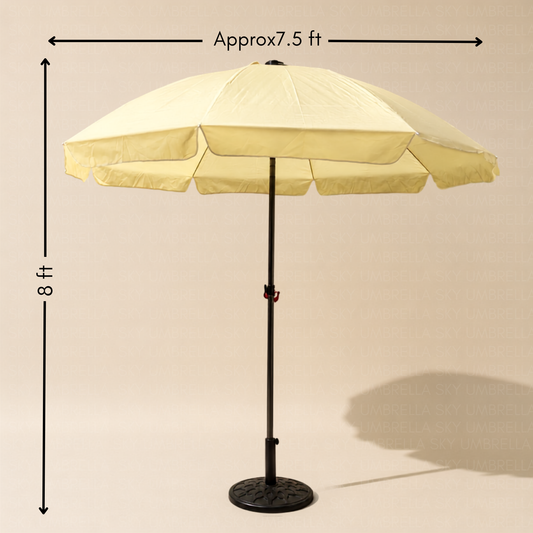
Throughout this guide we have used the 2 Fold Promotional Umbrella – 27” as a running example because it sits at the top of the 2-fold size range, with a canopy diameter of approximately 52 inches, giving your logo more usable print area than smaller 2-fold options. It has rust-resistant metal ribs, a 2-fold collapsible shaft for easy carrying, and a waterproof polyester pongee canopy with UV coating that holds up through repeated monsoon use. The handle is ergonomic and brandable, and the canopy comes in blue, red, black, white, or custom brand colors, with single or multi-panel logo printing. It is priced at ₹190 to ₹250 per piece depending on order quantity, with MOQ available on request. View full specifications and request a quote on the 2 Fold Promotional Umbrella – 27” product page.
9. A Realistic Example: Planning a Bulk Order
To make these concepts concrete, picture a mid-sized regional bank planning to order 1,000 branded umbrellas ahead of the monsoon season, for distribution at branch openings and as a client relationship gift. This scenario is illustrative only and not a real named client, but it reflects the kind of order pattern we see regularly.
The bank’s marketing team initially requests a quote assuming a bold, multi-color logo printed across two canopy panels. The first quote comes back higher than expected, largely because that design requires more screens and setup steps.
After a conversation with the supplier, the team learns their logo reads clearly even in a simplified two-color version, and that printing it on a single panel of a large 27-inch canopy still gives strong visibility, since canopy size itself does much of the work. They also learn that 1,000 pieces is well above the small trial-order tier, so the setup cost is already spread across a large volume, keeping their per-piece price closer to the lower end of the ₹190 to ₹250 range.
Finally, because they started the conversation two months out, they avoid any rush surcharge, since the timeline comfortably fits standard lead times. The result is a design that still looks strong and on-brand, at a materially better cost than their initial version, simply because they understood which levers to adjust.
10. Checklist for Requesting an Accurate Quote
Before you email a supplier for a quote, gathering the following details upfront will get you a far more accurate number on the first try.
Confirm your target quantity, or a realistic range, since pricing tiers depend heavily on volume.
Decide how many ink colors your logo genuinely needs, and whether a simplified version would work just as well.
Decide how many canopy panels you want printed, and whether a single large panel would achieve the visibility you need.
Specify your preferred canopy size and fold type, since these affect both base cost and print area.
Confirm your fabric and frame preferences, particularly if monsoon durability matters for your use case.
Share your actual required delivery date, rather than a padded “as soon as possible,” so the supplier can confirm whether it fits standard lead time or needs a rush surcharge.
Ask explicitly whether the setup or plate charge is itemized separately or built into the per-piece price, so you can compare quotes like-for-like.
Ask whether the supplier retains setup information for reorders of the same design.
Request the quote in writing with all of the above stated clearly, so there are no surprises on the final invoice.
11. Frequently Asked Questions
Is the screen or plate setup charge a one-time fee, or do I pay it on every reorder?
Generally yes, it is a one-time cost for preparing equipment for your design. Whether a reorder of the same design incurs it again depends on the supplier, so ask directly.
Why did one supplier’s quote not mention a setup charge at all?
Some suppliers itemize it separately, others bundle it into a blended per-piece price. If a quote does not mention it, ask whether it was absorbed into the unit price or waived for that order size.
Does a bigger umbrella always cost more to brand?
A larger canopy uses more fabric, but setup cost is driven more by colors and panels than canopy size alone. A larger canopy, like the 27-inch example here, can make a simple single-color print look more impactful without extra colors or panels.
What is the minimum order quantity for branded umbrellas?
MOQs vary by supplier and product. Confirm the exact MOQ for your chosen product directly with the supplier, since it is typically available on request.
How far in advance should I order to avoid rush charges?
This depends on production load and design complexity, but generally, the earlier you start the quote and approval process relative to your event date, the more likely you are to stay within standard lead time.
Can I get a sample before committing to a bulk order?
Most reputable suppliers can arrange a sample or small trial run before a full order, a sensible way to confirm print quality and durability before scaling up.
12. Conclusion
The confusion around umbrella branding costs almost always comes down to buyers and suppliers not speaking the same language about what drives the price. Once you understand that canopy size, frame and fabric quality, fold type, print colors, print panels, order quantity, and lead time all combine to produce your quote, and that the setup charge is a one-time cost amortized across your order rather than a recurring per-piece fee, comparing quotes becomes far less stressful.
The exact figure for setup or plate charges will always depend on your vendor, printing method, and order size, which is why this guide has focused on the factors rather than invented numbers. The one number we can share with confidence is the per-piece price range for the 2 Fold Promotional Umbrella – 27”, which runs from ₹190 to ₹250 depending on order quantity, with MOQ available on request.
If you are planning a corporate umbrella order and want clarity on exactly what your design and quantity would cost, including a transparent breakdown of any setup or plate charges, request a formal quote from Sky Umbrella today, or explore the full promotional umbrella collection and learn more about us as a corporate umbrella manufacturer in India.