Umbrellas for Munnar & Wayanad's Hill-Station Resorts, Tea Estates & Homestays (2026): The Complete Mist, Monsoon & Slope Buying Guide
If you run a tea-estate bungalow in Munnar or a homestay tucked into Wayanad's spice gardens, you already know the one thing every generic "monsoon umbrella guide" gets wrong about your property: your climate problem was never really about rain. It's about mist that never quite lifts, canopies that never quite dry, and decks built on a slope where a standard parasol base just doesn't want to stay put.
Sky Umbrella has now written buying guides for Goa's coastal wind, Kerala's backwater humidity, and Rajasthan's desert dust — three genuinely different climate problems for three genuinely different hospitality markets. Munnar and Wayanad are a fourth, and arguably the most distinct of the set: cool, high-altitude, fog-prone hill country where the real enemy isn't a monsoon cloudburst, it's weeks of low-intensity drizzle, ground-hugging mist, and humidity that sits in the 85–95% range for months at a stretch. This guide is built around that specific problem, using real products from Sky Umbrella's own catalogue — no invented specs, no copy-pasted monsoon advice that happens to mention Kerala.

Table of Contents
- The Climate Problem: Mist, Monsoon and Altitude
- Who's Actually Buying: Three Very Different Hill-Station Customers
- Four Buying Criteria Specific to Hill-Station Properties
- Expert Tips From the Field
- Case Study: A Tea-Estate Homestay's Season-Long Mildew Problem
- Comparison Table: Which Product Fits Which Buyer
- Pros & Cons: Centre-Pole vs. Side-Pole on Sloped Terrain
- Industry Applications
- The Hill-Station Buying Guide Checklist
- Frequently Asked Questions
- Conclusion & Next Steps
The Climate Problem: Mist, Monsoon and Altitude
Every regional guide in this series has been built around one honest observation: the generic advice circulating online treats "outdoor shade in India" as a single climate problem, when it genuinely isn't. Goa's issue is salt air and onshore gusts. Kerala's backwaters face duration — two monsoons and roughly six months of near-continuous rain. Rajasthan's deserts face the opposite: dry heat, fine dust, and sudden windstorms. Munnar and Wayanad sit at 1,500–2,100 metres of elevation, and that altitude changes the physics of the problem entirely.
Two Monsoons, Plus Something No Other Region in This Series Has: Near-Constant Mist
Like the rest of Kerala, the Western Ghats hill stations get both the southwest monsoon (June–September) and a share of the northeast monsoon (October–November). But what makes Munnar and Wayanad distinct isn't the rain total — it's what happens on the days it isn't actively raining. Orographic cloud cover, valley fog, and ground mist are a near-daily feature for much of the year, especially at dawn and dusk when tea-estate photo walks and nature trails are busiest. A canopy that gets folded away damp in the morning often doesn't fully dry before the next shower rolls in that evening. That single fact — persistent dampness rather than episodic downpours — is the spine of the care and fabric advice in this guide.
Why "Windproof" Means Something Different on a Ridge
Sky Umbrella's own frame-material guide covers windproof engineering in general terms, and the Mumbai coastal guide covers sustained onshore gusts. Hill-station wind is a third pattern again: steady ridge-top and valley-channel winds that build gradually rather than arriving as a single gust front, often strongest in the late afternoon as warm valley air rises. A frame rated for sudden coastal gusts or Rajasthan's dust-storm squalls isn't being tested the same way up here — the practical requirement is sustained flex-and-recover performance over hours, not a one-off shock rating. None of Sky Umbrella's products carry a hill-altitude-specific wind certification, and this guide won't invent one; the honest buying advice is to favour a higher rib count and manual-tilt mechanisms that can be adjusted as the afternoon wind shifts direction, rather than assuming any single "windproof" label covers every climate.
Who's Actually Buying: Three Very Different Hill-Station Customers
This is the structural finding that shapes the rest of the guide. Unlike a single-property purchase, Munnar and Wayanad's hospitality and tourism economy splits cleanly into three buyers with different budgets, different aesthetics, and different failure modes if they get the product wrong.
Heritage Tea-Estate Bungalows & Boutique Plantation Resorts
Colonial-era planters' bungalows and the boutique resorts built around working tea and spice estates have a visual language of their own: muted, natural tones — khaki, cream, deep green, weathered wood — rather than the bright primary colours common on a beach-shack umbrella. These properties are often photographed for their own marketing, so a shade structure that looks out of place in every guest photo is a real commercial cost, not just an aesthetic quibble. Budget here tends to be higher and the purchase is usually a one-time capital item meant to last several seasons.
Homestays & Budget Hill Resorts
Kerala's homestay economy is enormous, and Munnar/Wayanad have some of the state's highest homestay density thanks to trekking and plantation-tourism demand. These properties typically have smaller, often sloped or terraced decks, tighter capital budgets, and a straightforward need: keep breakfast tables and sit-outs dry without a large capital outlay or a product that needs a flat concrete pad to anchor into.

Trekking Operators, Naturalist Guides & Plantation-Walk Companies
This is the buyer this series hasn't really addressed yet in a Kerala context: the guides and field staff who spend entire working days outdoors on tea-garden walks, spice-plantation tours, and forest-fringe treks near Wayanad's wildlife sanctuaries. Their gear needs are closer to the construction-site workforce guide's logic than to any hospitality-furniture purchase: hands occupied with binoculars, trail notes or a group of guests to manage, hours of continuous exposure, and — uniquely for this persona — a genuine safety stake in staying visible to their group on a foggy trail.

Four Buying Criteria Specific to Hill-Station Properties
Four factors separate a hill-station purchase from every other regional guide in this series, and they map directly onto buying decisions.
Canopy Drying and Mildew Prevention
In a climate where a canopy may not fully dry for days at a time, mildew and musty odour are the single most common complaint about outdoor fabric umbrellas at altitude — far more common than frame failure. A double-layer, ventilated canopy design, like the one on the Centre Pole Double Layer Garden Umbrella, genuinely helps here: the gap between the two canopy layers lets trapped moist air escape rather than sitting against the fabric, which is a real functional advantage in this specific climate, not just a design flourish. Whatever canopy is chosen, the routine matters as much as the product: close the umbrella fully open-side-down whenever possible so water sheds rather than pools in the folds, and avoid folding and storing it wet for more than a day.

Visibility in Fog
This is a genuinely new buying criterion for this series. On a misty plantation trail or a foggy hill road, a muted khaki or deep-green canopy — exactly the colour a heritage bungalow wants at its entrance — can be a liability for a guide trying to keep a walking group visible to each other. Properties running guided walks should think about colour by role: muted tones for fixed, aesthetic shade at the bungalow or reception, and a visible accent colour or the Transparent Clear Umbrella's see-through canopy for guides and staff who need to keep sightlines open on the trail rather than disappearing under an opaque dome.

Slope-Stable Basing
A flat, level concrete pad is the quiet assumption behind almost every umbrella base sold in India, including Sky Umbrella's own Heavy 8Kg Stand Base. Many hill-resort decks and homestay courtyards are built on genuinely sloped or terraced ground, which means a loose, flat-bottomed base can walk or tip over time even without strong wind. The honest fix isn't a special product Sky Umbrella doesn't make — it's installation discipline: level the specific spot where the base sits with a paver or packed gravel pad before placing it, rather than assuming the base alone will compensate for a slope, and check it after the first few heavy showers of the season when ground settling is most likely.

Ridge-Wind vs. Monsoon-Wind Windproofing
As covered above, the practical answer for hill properties is to favour higher rib counts and a manual-tilt function that lets staff angle the canopy away from the afternoon valley breeze, rather than relying on a single "windproof" rating designed around a different wind pattern entirely.
Expert Tips From the Field
A few practical notes worth building into a hill-property's standard operating procedure, drawn from how this climate actually behaves rather than generic umbrella-care advice:
- Assign one staff member per shift to check that outdoor umbrellas are closed before the evening mist sets in — a canopy left open overnight in hill-station dew collects far more moisture than one closed and under cover, even without active rain.
- Rotate which side of a centre-pole umbrella faces the prevailing afternoon wind every few weeks rather than always orienting it the same way — this evens out fabric and rib stress instead of concentrating wear on one panel.
- For bungalow properties photographing their own grounds for marketing, close umbrellas during the specific mid-morning hours when fog is heaviest and visibility is poorest — the shade isn't doing useful work in that window anyway, and keeping the canopy under cover during the dampest hours measurably extends its working life.
- Keep a small stock of the Compact 3Fold Travel Umbrella at reception for day-trippers who arrive from Kochi or Kozhikode without rain gear and get caught out by an afternoon shower they didn't expect at altitude — a low-cost, high-goodwill guest-service item.

Case Study: A Tea-Estate Homestay's Season-Long Mildew Problem
This is an illustrative scenario built from the buying patterns and product-care issues described above, not a named client case study.
Consider a mid-sized tea-estate homestay with six guest cottages and a shared breakfast veranda, roughly 1,700 metres up, that installed a standard single-layer centre-pole garden umbrella over its veranda seating two seasons ago. Within four months, staff noticed a persistent musty smell whenever the umbrella was opened after a few overcast days — the canopy was being folded away damp most evenings because the near-constant mist meant it rarely had a dry afternoon window to air out properly. By the second monsoon, a faint mildew staining had started to show on the underside of the fabric, visible in exactly the kind of close-up photo a guest might post online.
The fix wasn't a different brand — it was a different canopy design and a different routine. Switching to a double-layer, ventilated design for the replacement unit, and building in a simple rule (umbrella closed and stored under the veranda roof rather than left open overnight, canopy wiped down with a dry cloth on the rare fully sunny afternoon) solved the recurring odour within one season. The lesson generalises: in this specific climate, canopy ventilation and a disciplined drying routine matter more than canopy price point.
Comparison Table: Which Product Fits Which Buyer
| Buyer | Core need | Recommended product | Price (₹) | Why it fits |
|---|---|---|---|---|
| Heritage tea-estate bungalow | Aesthetic-matched fixed shade for veranda/lawn | Luxury Centre Pole Garden Umbrella | 21,000 | Scalloped-edge canopy and wood-finish pole read as premium, not branded |
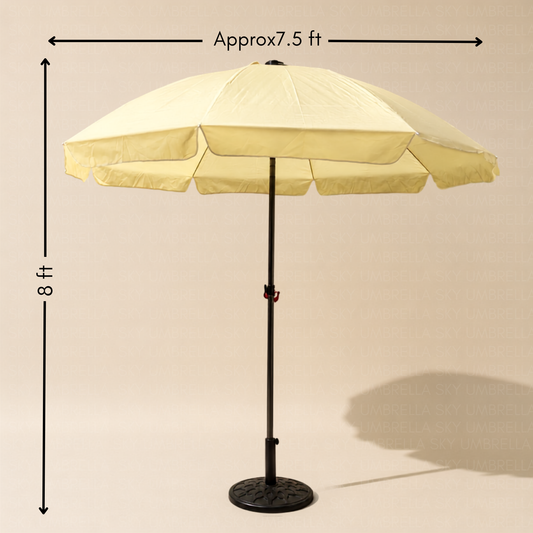
| Boutique plantation resort (humid courtyard dining) | Ventilated shade that resists mildew | Centre Pole Double Layer Garden Umbrella | 6,000 | Double-layer canopy vents trapped moist air; khaki tone matches plantation palette |
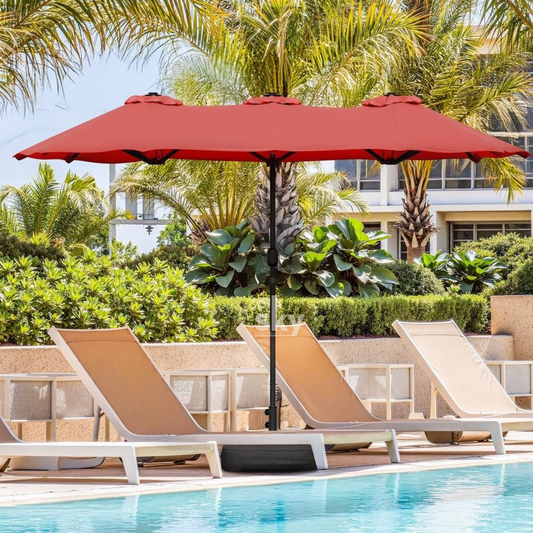
| Homestay / budget hill resort (sloped or narrow deck) | Shade that doesn't need a central planting point | Round or Square Shape Side Pole Patio Umbrella | 7,500 | Offset pole clears the deck; easier to site on uneven ground than a centre-pole design |
| Any fixed installation on sloped ground | Ballast that resists tipping | Heavy 8Kg Stand Base | 1,200 | Added weight over a packed/levelled base matters more here than on flat ground |
| Trekking/nature-walk guide or guest on a misty trail | Retained sightlines in fog | Transparent Clear Umbrella | 490 | Clear PVC canopy keeps the trail and group visible, unlike an opaque canopy |
| Plantation-walk staff on continuous outdoor duty | Hands-free, all-day rain protection | WeatherWise Scorpio RainSuit | 1,499 | Reinforced, water-repellent fabric built for sustained exposure, not just a quick dash |
| Day-tripper or unprepared guest | Low-cost compact umbrella at reception | Compact 3Fold Travel Umbrella | 599 | Carabiner clip attaches to a daypack for trekking; folds small for a day visit |
| Resort entrance / supervisory staff | Durable handheld umbrella for duty use | Classic Premium Windproof Umbrella | 1,599 | 16 reinforced ribs and a 27-inch canopy for daily guest-facing duty |
Pros & Cons: Centre-Pole vs. Side-Pole on Sloped Terrain
Centre-pole umbrellas (Luxury Centre Pole Garden Umbrella, Centre Pole Double Layer Garden Umbrella)
- Pros: Larger canopy diameter for the price, classic heritage-bungalow silhouette, generally more stable once properly based on level ground.
- Cons: Needs a genuinely level, solid footing to avoid leaning on sloped ground; the pole itself can obstruct a small or narrow seating arrangement.
Side-pole umbrellas (Round/Square Shape Side Pole Patio Umbrella)
- Pros: Offset pole clears the table or deck entirely, which is genuinely easier to site on a narrow terraced deck where a centre post has nowhere level to land; good fit for homestays retrofitting shade onto an existing sit-out.
- Cons: The cantilevered design puts more leverage on the base in sustained wind, so the basing/ballast advice above matters even more than it does for a centre-pole unit; base is sold separately on both the round and square variants.
Industry Applications
Tea and spice estate resorts. Fixed veranda and lawn shade for guest dining and lounging, chosen primarily for aesthetic fit with the property's colonial-plantation visual identity. Front-of-house staff and duty supervisors at these properties are generally better served by a durable handheld option like the Classic Premium Windproof Umbrella than by a promotional giveaway umbrella, given how guest-facing the role is.
Wildlife sanctuary lodges and eco-resorts. Properties near Wayanad's forest fringes often run early-morning and dusk nature walks precisely when mist is heaviest — the visibility and guide-safety considerations in this guide apply directly.
Homestays and farm-stays. The largest single segment of hill-station hospitality by property count; practical, budget-conscious shade for breakfast and sit-out areas.
Trekking and nature-tourism operators. Field staff kitted out with rainsuits rather than umbrellas for guided multi-hour walks, plus compact umbrellas retailed or loaned to day visitors.
The Hill-Station Buying Guide Checklist
Before placing an order for Munnar, Wayanad, or any comparable hill property, it's worth checking each of these:
- Does the canopy design allow trapped moisture to vent, or is it a single sealed layer that will hold damp air in a near-constant-mist climate?
- Is the colour chosen for where it will actually be used — muted and aesthetic for a bungalow entrance, visible and practical for a guide on a foggy trail?
- Has the exact installation spot been levelled, or is the base being asked to compensate for a slope it was never designed for?
- Is the rib count and tilt mechanism suited to a steady, direction-shifting ridge wind rather than a one-off coastal or desert gust?
- Does field staff gear (rainsuits, not umbrellas) match the actual duty pattern — continuous multi-hour outdoor exposure rather than brief transit between buildings?
Frequently Asked Questions
Is a garden umbrella actually better than a gazebo for a hill-station veranda?
For a single table or a small cluster of seating, a centre-pole or side-pole umbrella is usually more cost-effective and easier to site on uneven ground than a full gazebo frame, which needs a larger, genuinely level footprint. For larger covered dining areas, a gazebo may still make more sense — that trade-off is covered in Sky Umbrella's patio umbrellas vs. gazebos guide.
How is Munnar's climate different from Kerala's backwater properties, which Sky Umbrella already covered?
The backwater resorts guide is built around sustained lowland humidity and duration — two monsoons at near sea level. Munnar and Wayanad add altitude, which brings near-constant mist and fog even outside active rainfall, plus sloped terrain that the flat backwater decks don't have to deal with.
Does Sky Umbrella offer a canopy specifically rated for high-altitude wind?
No. None of the products in this guide carry a hill-altitude-specific wind certification, and this guide doesn't claim one. The practical advice is to choose higher rib counts and a manual-tilt mechanism, and to size and orient the installation with the property's actual wind pattern in mind.
Will a double-layer canopy actually stop mildew, or just slow it down?
Ventilation reduces how long moisture sits against the fabric, which measurably reduces mildew risk, but it doesn't replace a basic drying routine. In a climate this damp, care habits (closing the umbrella fully, avoiding storage while wet) still matter alongside the product choice.
What should trekking and nature-tour operators buy for guiding staff rather than guests?
A rainsuit, not an umbrella, for any guide spending multiple continuous hours outdoors with hands occupied managing a group — the WeatherWise Scorpio RainSuit is built for exactly this kind of sustained exposure. Sky Umbrella's full range is covered in the raincoat buying guide.
Is a transparent umbrella actually useful here, or just a novelty?
For anyone leading or following a group on a foggy trail, yes — a clear canopy keeps the path and the rest of the group visible in a way an opaque canopy doesn't, which is a genuine safety consideration specific to this climate, not just a style choice. Sky Umbrella's dedicated guide to the product is here: Transparent Umbrellas in India.
Does Sky Umbrella deliver to Munnar and Wayanad?
Sky Umbrella ships pan-India; properties should confirm current delivery timelines for their specific pin code directly with the team before ordering against a fixed installation date, particularly during peak monsoon months when logistics across the Western Ghats can slow down. Contact Sky Umbrella to confirm.
Conclusion & Next Steps
Munnar and Wayanad's hill-station hospitality market isn't a smaller version of Kerala's backwater guide or a cooler version of a generic monsoon piece — it's a genuinely distinct buying problem shaped by altitude, persistent mist, and sloped terrain. The right umbrella for a tea-estate bungalow's veranda is rarely the right umbrella for a homestay's narrow sit-out, and neither is the right gear for a naturalist guide leading dawn walks through fog. Matching the product to the specific buyer, climate behaviour, and installation surface — not just picking the biggest or most expensive umbrella in the catalogue — is what actually protects the investment through a long, damp season.
Sky Umbrella supplies all of the products featured in this guide, along with full garden and patio umbrella and rainwear ranges, and can advise on sizing and basing for a specific property layout. For bulk or branded orders for a hospitality group, estate, or tour operator, reach out through Contact Us or learn more about Sky Umbrella's corporate and bulk manufacturing capability. Kerala-specific sourcing is also available through the Corporate Umbrella Manufacturers in Kerala and Garden Umbrella Manufacturers in Kerala pages. Learn more about the business on About Us, or browse the full range at skyumbrella.co.