Vented Double-Canopy Umbrellas Explained (2026): How Wind-Vents Actually Stop Inversion
If you've ever watched an umbrella turn inside out in a sudden gust — and then watched the person standing next to you keep walking, canopy intact, like nothing happened — you've seen the difference a vented double canopy makes. It isn't the fabric. It isn't luck. It's a specific piece of engineering that most umbrella listings mention in one throwaway line ("wind-resistant design") without ever explaining what's actually happening up there.
We get asked some version of this question often enough — by corporate buyers comparing two near-identical-looking golf umbrellas at very different prices, and by hotel and café procurement teams trying to work out why one patio umbrella survives a pre-monsoon squall while another doesn't — that it's worth a dedicated, honest explanation. This guide breaks down exactly how a vented double canopy works, how it differs from simply adding more ribs, which of Sky Umbrella's own products genuinely use the design (and which don't, and why that's sometimes the right call), and how to tell a real vent from a marketing word.

Table of Contents
- What "Vented Double Canopy" Actually Means
- How a Wind Vent Actually Stops Inversion (No Physics Degree Required)
- Vented Canopy vs. High Rib Count: Two Different Answers to the Same Problem
- Which Sky Umbrella Products Actually Have a Vented Double Canopy
- Expert Tips: How to Tell a Genuine Vent from a Marketing Label
- Case Study: A Beachfront Café's Umbrella Replacement Problem
- Buying Guide: Which Design Actually Fits Your Situation
- Pros & Cons: Vented Double Canopy vs. Single Reinforced Canopy
- Industry Applications
- Care & Maintenance for a Vented Canopy
- Frequently Asked Questions
- Conclusion
What "Vented Double Canopy" Actually Means
A standard umbrella is one continuous piece of fabric stretched over a rib frame. When wind hits it from below or at an angle, the air has nowhere to go — it pushes against the full underside of the canopy at once, and if the force is greater than the ribs can resist, the frame flexes past its limit and the umbrella flips inside out.
A vented double canopy changes the geometry. Instead of one solid fabric dome, the canopy is built in two layers: a lower, larger canopy and a smaller upper canopy mounted slightly above it, with a visible gap — the vent — running around the umbrella where the two layers meet. That gap isn't a manufacturing defect or a design afterthought. It's a deliberate air escape route. When wind pushes up against the underside of the lower canopy, a portion of that air is forced up and out through the vent instead of building up pressure underneath the fabric. Less trapped pressure means less force trying to invert the frame.
This is genuinely different from simply making the umbrella "stronger." A vented canopy doesn't resist wind by being tougher — it resists wind by giving it somewhere to go. That's why you'll often see a vented double-canopy umbrella marketed as "windproof" even though its frame isn't dramatically heavier or more reinforced than a comparable single-canopy umbrella — the wind resistance is coming from the airflow path, not just the materials.
How a Wind Vent Actually Stops Inversion (No Physics Degree Required)
Three things happen in sequence during a gust, and the vent interrupts the chain at the second step:
- Step 1 — Wind meets the canopy. A gust travels under or across the open umbrella and strikes the underside of the fabric.
- Step 2 — Pressure builds (or escapes). On a solid single canopy, that air has no exit, so pressure accumulates across the whole underside surface. On a vented double canopy, a meaningful share of that same air is channelled up through the gap between the two layers and released above the umbrella, so pressure never fully builds.
- Step 3 — The frame responds. With less accumulated pressure, the ribs flex less, and the umbrella is far less likely to cross the point where it buckles backward (inversion). Some premium vented designs also pair the vent with ribs engineered to flex and spring back rather than lock rigid — which matters, because a rib that can't flex at all tends to snap rather than survive a strong gust.
It's worth being precise about what this does and doesn't promise. A vented double canopy meaningfully reduces the odds of inversion in sustained wind and sudden gusts — it does not make an umbrella indestructible, and no honest seller should claim a specific wind-speed rating without an independent lab test behind it. None of Sky Umbrella's vented products carry a certified wind-speed rating, and this article won't invent one; what follows is an explanation of the mechanism and an honest look at which products use it, not a guarantee against every storm.
Vented Canopy vs. High Rib Count: Two Different Answers to the Same Problem
This is the comparison we get asked about most directly, usually by a buyer looking at two umbrellas side by side — one advertised as "16-rib windproof," the other as "vented double canopy" — and wondering which claim actually means more. The honest answer is that they're solving the same problem (wind-induced inversion) through two different mechanisms, and neither is strictly superior in every situation.
| Factor | Vented Double Canopy | High Rib Count (e.g., 16 ribs) |
|---|---|---|
| How it resists wind | Releases air pressure through a gap between two canopy layers | Distributes wind load across more structural support points so no single rib takes the full force |
| Best suited to | Sudden gusts, open/exposed settings (golf courses, beachfronts, rooftops) | Sustained strong wind combined with heavy rain (coastal monsoon conditions) |
| Visual tell | A visible gap or seam ring around the canopy, usually just below the top | Visibly more rib spokes when open; canopy often looks more faceted/segmented |
| Typical category fit in this catalogue | Golf umbrellas, patio and garden umbrellas | Everyday commuter and travel umbrellas |
| Trade-off | The vent seam is one more stitched joint that can be a wear point over years of heavy folding | More ribs add a small amount of weight and folded bulk |
Expert tip: the two approaches aren't mutually exclusive, and the better bulk-order question to ask a supplier isn't "vented or reinforced?" but "which one matches where this umbrella will actually live?" A golf umbrella spends its life in open, gusty, exposed settings — exactly where a vent earns its keep. A doorman's or commuter's umbrella spends its life moving in and out of buildings and traffic, where sheer rib strength against sideways rain matters more than a venting gap. Sky Umbrella's own catalogue reflects this split rather than forcing one design onto every product.
Which Sky Umbrella Products Actually Have a Vented Double Canopy
We checked every relevant product's own specification sheet directly before writing this — rather than assuming "golf umbrella" or "garden umbrella" automatically means vented, since several non-vented products use similar-sounding marketing language. Here is what's actually confirmed, product by product.
Double Layer Golf Umbrella — the clearest example in the catalogue

This is the one product in the catalogue whose own listing spells out the vent mechanism in plain language: "the innovative double-canopy vented design allows wind to pass through the vents, minimizing the risk of inversion." It pairs a 30-inch double-layer canopy with a 52-inch open diameter — explicitly sized for two people, which is a genuinely useful detail for anyone buying for client golf days or doorman duty at a porte-cochère. It's an automatic-open, fiberglass-framed umbrella sold as a made-to-order bulk item (quote-based, no fixed single-piece retail price), which makes sense for its primary use case: corporate branding and golf-day gifting rather than individual retail purchase.
Centre Pole Double Layer Garden Umbrella — vented for airflow, not just wind

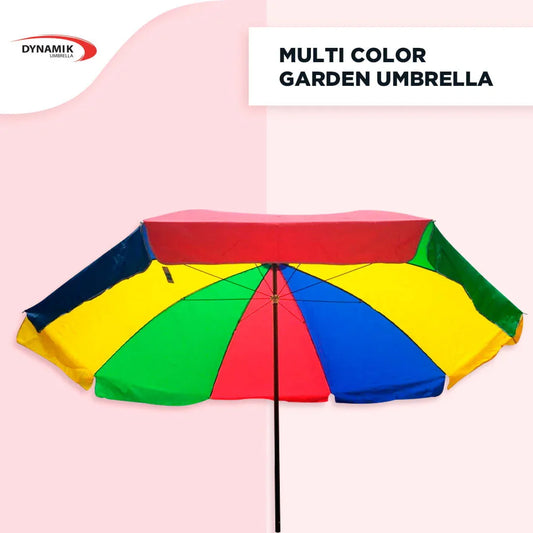
Worth noting because the framing is slightly different here: Sky Umbrella's own copy describes this umbrella's double-layer canopy as "ventilated" primarily for "improved airflow and enhanced stability," alongside a wooden-finish centre pole aimed at gardens, patios, cafés, resorts and poolside seating. In a dining or lounge setting, a vent does double duty — it reduces wind-driven movement, but it also lets hot trapped air escape from under a large, mostly stationary canopy, which is a genuine comfort benefit a pure rib-count umbrella can't offer. It ships with a base included, 40 units in stock as of this writing.
Double Canopy Center Pole Patio Umbrella — the budget-tier vented option

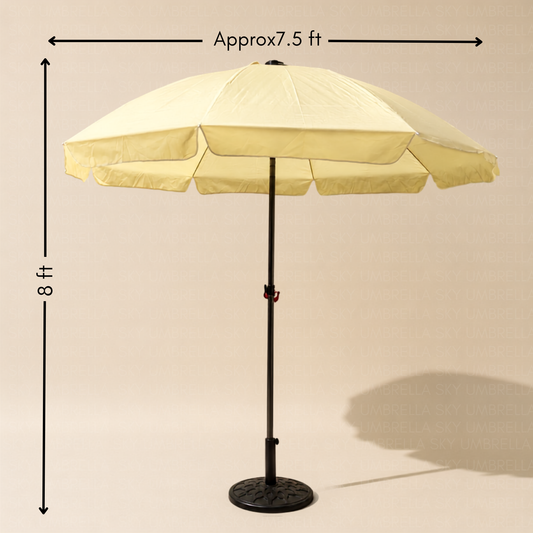
At roughly half the price of the centre-pole model above, this is the entry point into vented double-canopy shade for restaurants, cafés and garden-party setups that need "serious shade" at scale rather than a single premium centrepiece. Sky Umbrella's own listing is upfront that the base is sold separately — a detail worth catching before a bulk order, since it changes the real landed cost per unit. 45 units are in stock as of this writing.
Classic Premium Windproof Umbrella — the honest non-vented comparison
We're including this one deliberately, without a dedicated product image this time (its full photo set has been used extensively across recent guides), because it's the clearest real-world example of the rib-count approach described in the comparison table above. Its own specification sheet makes no vent claim at all — it's a single canopy reinforced with 16 ribs, "double the ribs of a standard umbrella," and markets its wind resistance purely on structural reinforcement. At ₹1,599 with a 27-inch canopy and a natural wooden handle, it's positioned as an everyday commuter and travel umbrella rather than a fixed-installation or golf umbrella — exactly the category where, per the comparison above, rib count tends to matter more than venting. You can see the full breakdown of how rib count affects wind resistance in our dedicated rib-count guide.
Expert Tips: How to Tell a Genuine Vent from a Marketing Label
Because "windproof" has become a near-meaningless word on generic umbrella listings, here's how to actually verify a vent claim before placing a bulk order — whether you're buying from Sky Umbrella or comparing quotes from another supplier:
- Look for a visible seam ring, not just a word. A genuine vented double canopy has an unmistakable physical gap — usually a few centimetres — between an upper and lower canopy layer. If a product photo doesn't show this and the listing just says "windproof" or "wind-resistant," that claim is very likely resting on rib count or fabric tension alone, which isn't a problem, but it isn't a vent either.
- Ask whether the vent is structural or cosmetic. A small number of lower-cost umbrellas add a decorative second layer of fabric purely for a two-tone look, without engineering a real airflow gap underneath it. Ask the supplier directly whether the upper canopy is mounted on its own separate rib set with clearance beneath — that's what actually lets air pass through.
- Check whether the open mechanism is automatic or manual. This doesn't affect wind resistance directly, but on bulk corporate orders it affects how consistently a group of users will actually open the umbrella fully — a half-opened canopy loses most of its wind-resistance benefit regardless of design, vented or not.
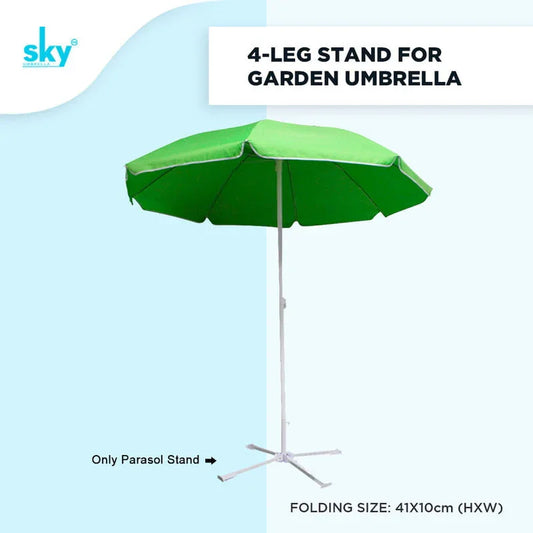
- For fixed installations, confirm the base weight separately. A vented canopy reduces lift on the fabric itself, but it does nothing to stop a lightweight, under-ballasted base from tipping over in a gust. Pair any patio or garden vented umbrella with an adequately weighted base — our own umbrella stands and bases buying guide covers how to size that correctly.
Case Study: A Beachfront Café's Umbrella Replacement Problem
This is an illustrative scenario built from the kind of replacement pattern we see repeatedly in hospitality orders, not a specific named client. A mid-sized beachfront café on India's west coast was replacing its patio umbrellas roughly every eight to ten months — not because the fabric wore out, but because the canopies kept inverting in the pre-monsoon squalls that roll through most afternoons between May and June. The umbrellas in question were single-canopy units chosen mainly on price, with a modest rib count.
The fix wasn't a more expensive umbrella in the abstract — it was matching the design to the actual failure mode. Because the problem was specifically sudden gusts inverting an otherwise intact canopy (not fabric tearing or rust), switching the open-seating section to a vented double-canopy design addressed the root cause directly, while the more sheltered inner seating kept simpler single-canopy umbrellas, since they weren't failing in the same way and didn't need the extra cost. The lesson generalises well beyond this one café: match the engineering to the specific failure you're actually seeing, rather than assuming "more expensive" automatically means "more wind-resistant" for your particular setting.
Buying Guide: Which Design Actually Fits Your Situation
| Your situation | Recommended design | Why |
|---|---|---|
| Corporate golf days, client entertainment, outdoor events | Vented double canopy (Double Layer Golf Umbrella) | Open, exposed settings with sudden gusts — exactly where a vent's pressure-release mechanism earns its cost |
| Hotel, resort or café fixed outdoor seating | Vented double canopy with a matched base (Centre Pole Double Layer or Double Canopy Center Pole) | Stationary installations benefit from both the wind-safety and the heat-venting comfort angle |
| Daily commuter / everyday personal use | High rib-count single canopy (Classic Premium Windproof) | Sustained sideways rain and portability matter more than a vent built for open gusts |
| Budget-constrained large-scale restaurant seating | Double Canopy Center Pole Patio Umbrella | Vented design at the lowest price point in this category — remember to budget for the base separately |
| Premium hospitality courtyard or lobby centrepiece | Centre Pole Double Layer Garden Umbrella | Vented design plus a wooden-finish pole aesthetic suited to a more upscale setting |
Pros & Cons: Vented Double Canopy vs. Single Reinforced Canopy
| Pros | Cons | |
|---|---|---|
| Vented Double Canopy | Directly addresses the inversion mechanism itself; adds airflow/cooling benefit under fixed installations; often lighter per unit of wind resistance than adding many more ribs | The vent seam is an extra stitched joint and a long-term wear point; slightly more complex (and costly) to manufacture and repair; cosmetic imitations exist, so verification matters |
| Single Canopy, High Rib Count | Simpler construction with fewer failure points; typically easier and cheaper to repair a single damaged rib; well suited to sustained heavy rain | Still relies on raw structural resistance — in a strong enough sudden gust it has no pressure-release option and depends entirely on the frame not flexing past its limit |
Industry Applications
Hospitality (hotels, resorts, cafés, restaurants): outdoor seating in coastal, hill-station or open courtyard settings is exactly where sudden gusts combine with a need for all-day comfort — the dual benefit of wind safety and heat venting makes the double-layer designs a natural fit for fixed installations, provided they're paired with a properly weighted base.
Corporate gifting and event branding: a golf umbrella handed out at a client golf day or placed at an outdoor activation booth needs to survive genuinely unpredictable open-ground wind for the length of a single event — this is squarely the scenario a vented double canopy was engineered for, and it also happens to offer a larger printable surface area for branding.
Real estate site visits and construction site offices: fixed shade at an open plot or site office faces the same unobstructed-wind problem as a beachfront café, without a building to break the gust first — the same buying logic applies.
Everyday personal and commuter use: daily users moving between buildings, vehicles and covered walkways are better served by a high rib-count single canopy that's simpler, lighter to carry folded, and built for sustained rain rather than open-ground gusts.
Care & Maintenance for a Vented Canopy
- Dry the umbrella fully — including the gap between the two canopy layers, where moisture can sit longer than on a single canopy — before folding and storing it, to avoid mildew building up inside the vent itself.
- Close the umbrella in genuinely extreme conditions (storm-force gusts, not routine rain) regardless of its vented design — the vent reduces inversion risk, it doesn't eliminate the value of common sense in a serious storm.
- Inspect the vent seam periodically on umbrellas used daily for a year or more; like any stitched joint, it's a sensible place to check for fraying before it becomes a tear.
- For fixed installations, re-check the base weight each season — a gust strong enough to tip an under-ballasted base will bring the umbrella down regardless of how well the canopy itself handles wind.
Frequently Asked Questions
Does a vented double canopy mean the umbrella is completely windproof?
No. It significantly reduces the risk of inversion from sudden gusts by giving trapped air an escape route, but no umbrella — vented or not — carries a guarantee against every wind condition. None of the products discussed here are independently wind-speed certified, and we won't invent a number that doesn't exist on the manufacturer's own spec sheet.
Is a vented double canopy always better than a high rib-count umbrella?
Not always — they solve the same problem differently, and the right choice depends on where the umbrella will actually be used. See the comparison table above for the specific trade-offs.
Can I tell if an umbrella is genuinely vented just by looking at a product photo?
Usually yes — look for a clear physical gap or seam ring between two distinct canopy layers, not just marketing language like "windproof" or "double layer" used without a visible structural gap.
Does the vent let rain in?
A well-engineered vent is positioned and angled so that the upper canopy overlaps the gap, which is designed to let air out rather than let rain in under normal conditions — but in genuinely heavy, wind-driven rain, some moisture at the vent line is a realistic trade-off for the wind-safety benefit, and this isn't a claim any of the products here make to avoid.
Do Sky Umbrella's vented products come with a wind warranty?
No product discussed in this guide carries a specific wind-speed or inversion warranty, and we're not going to claim one that isn't on the manufacturer's own listing. If a wind-failure warranty matters for your order, raise it directly with our team before placing a bulk order so expectations are clear on both sides.
Which is better for a bulk corporate gifting order — vented or rib-reinforced?
For a golf day, outdoor activation, or any open-ground event gifting scenario, the vented Double Layer Golf Umbrella is the more purpose-built choice. For a general-purpose corporate gift that recipients will use daily in city conditions, the rib-reinforced Classic Premium Windproof Umbrella is the more versatile pick. Our corporate umbrella manufacturing page can help size either option for a bulk order.
Conclusion
"Windproof" on an umbrella listing can mean genuinely different things depending on which engineering approach is actually doing the work — a vented double canopy releasing air pressure through a deliberate structural gap, or a reinforced rib set resisting the same pressure through raw structural strength. Neither is a universal answer; each fits a different real-world failure mode. The honest buying decision isn't "which umbrella is strongest" in the abstract, but which design actually matches where and how the umbrella will be used — open-ground events and fixed hospitality installations lean toward vented double canopies, while everyday commuting and sustained rain lean toward high rib counts.
If you're placing a bulk order and aren't sure which design fits your situation, get in touch with the Sky Umbrella team — we'll size the right option against your actual use case rather than just the highest-margin product in the catalogue.
Explore the Full Range
Browse the complete Garden & Patio Umbrella collection and the Promotional Umbrella collection for bulk corporate orders, or visit the About Us page to learn more about Sky Umbrella's manufacturing standards. For related reading, see our guides to umbrella rib count, frame materials, and wind-rated patio umbrellas for coastal properties.