Umbrellas & Rain Gear for Gardeners, Landscaping Crews & Nursery Staff in India (2026): The Complete Outdoor-Crew Buying Guide
Ask ten people what a gardener needs on a rainy day and nine will say "an umbrella." It's the wrong answer more often than not. A gardener, a landscaping-crew member, or a nursery hand spends the workday with both hands occupied — holding shears, gripping a trowel, dragging a hose, steering a wheelbarrow — which is exactly the condition a handheld umbrella is worst at accommodating. And unlike almost every other outdoor role we've covered in this series, the bigger year-round hazard for this workforce often isn't rain at all. It's sun.
This guide is the next chapter in a running series on the outdoor and facility workforce that keeps India's properties running — traffic constables, hotel doormen, housing-society security guards — and it closes a gap that's easy to overlook: landscaping, horticulture and nursery staff spend more cumulative hours outdoors than almost anyone else on a campus, resort, or housing society, yet they're routinely left out of welfare-kit and PPE planning altogether. What follows is a practical, task-by-task buying guide built around what grounds crews actually do all day, not a generic "best umbrellas" listicle.
Table of Contents
- Why Gardening & Landscaping Staff Need Different Gear
- The Two Hazards: Sun and Rain, Not Just Rain
- Hands-Free vs. Handheld: Matching Gear to the Task
- The Best Umbrellas for Field Crews
- Fixed Shade for Nurseries & Garden Centres
- Rainwear for Continuous Outdoor Rounds
- Buying Guide Checklist
- Comparison Table
- Pros & Cons: Wearable vs. Clip-On vs. Full Rainsuit
- Expert Tips for Welfare-Kit Planners
- Illustrative Case Study: A Grounds-Maintenance Contractor's Rollout
- Industry Applications
- Frequently Asked Questions
- Conclusion
Why Gardening & Landscaping Staff Need Different Gear
Most rain-gear buying guides are written for someone walking from a car to a building entrance — a few minutes of exposure, hands mostly free, moving in a straight line. None of that describes a landscaping crew. A typical day involves kneeling to weed a flower bed, climbing a short ladder to prune a hedge, hauling mulch in a wheelbarrow, and operating a hose or power trimmer — all tasks where a handheld umbrella is, at best, propped awkwardly against a shoulder and, at worst, simply left in the shed because it gets in the way.
That single constraint — both hands busy, most of the time — is why this persona needs a genuinely different gear strategy than an office commuter or even a security guard standing at a fixed post. The right answer usually isn't "a better umbrella." It's a mix of wearable hands-free protection for active tasks, a quick clip-on umbrella for rounds and supervision, fixed shade structures for anyone working from a stationary spot, and proper rainwear for the days when carrying any kind of umbrella stops making sense altogether.

The Two Hazards: Sun and Rain, Not Just Rain
Every other buying guide in this series has been framed around monsoon rain, because for a security guard, a doorman, or a delivery rider, rain is the dominant problem for roughly four months and a minor one the rest of the year. Gardening and landscaping staff face a different calendar. India's broad geography means most regions see strong, near-overhead sun from February through June, heavy monsoon rain from June through September, and still-significant daytime sun through the post-monsoon and winter months in much of the country. For a role that's outdoors from roughly 9 a.m. to 5 p.m. almost every working day, that adds up to close to ten months a year where some form of overhead protection — sun, rain, or both — is genuinely useful, not just a seasonal accessory.
That's why UV protection deserves equal billing with rain protection in this particular buying guide, and why several of the products below are chosen as much for their UV-blocking canopy fabric as for their water resistance. If you want the deeper technical breakdown of what UPF and UV-blocking claims actually mean on an umbrella spec sheet, our UV Protection Ratings in Umbrellas guide is a useful companion read before you place a bulk order for a grounds crew.
Hands-Free vs. Handheld: Matching Gear to the Task
Before picking a product, it helps to sort your crew by what they're actually doing, because the right gear changes task by task, not role by role. The same person might need two or three different pieces of kit across a single week.
- Pruning, weeding, planting, mulching, hedge-trimming: both hands are occupied almost constantly — this calls for a wearable, hands-free solution, not anything held.
- Watering rounds, hose-dragging, trolley or wheelbarrow work: one hand is usually free but changes constantly — a lightweight umbrella that clips onto the trolley, bag, or belt when not in use works better than one that has to be carried.
- Site supervision, client walkthroughs, inspection rounds across open grounds, golf courses, or large campuses: a full-size, properly windproof umbrella is worth the extra size, since supervisors are often walking exposed stretches with no tree cover.
- Heavy monsoon days — continuous planting, drainage-clearing, or watering work regardless of rain intensity: this is the point where an umbrella of any kind stops being the right tool, and proper rainwear takes over.
The Best Umbrellas for Field Crews
The Hands-Free Pick: Rainbow Hand Free Cap Umbrella
This is the one product in Sky Umbrella's catalogue whose own listing names "gardening" directly as an intended use, alongside fishing, hiking and outdoor work — which makes it an honest, not a stretched, fit for this guide. It's worn like a cap, held in place by an adjustable elastic headband, and opens like a normal umbrella while leaving both hands completely free for shears, a trowel, or a hose nozzle. Worth being upfront about its limits: it's a manual-open umbrella built with a metal frame and polyester canopy, and its own spec sheet scopes it for sun and light rain, not sustained heavy monsoon downpours or strong wind. For the actual hands-on work of pruning, weeding and planting through most of the year, that's exactly the right trade-off — comfort and hands-free convenience over heavy-weather toughness.
| Spec | Detail |
|---|---|
| Price | ₹250 |
| Fit | Adjustable elastic headband, worn like a cap |
| Canopy | Multicolour polyester, foldable |
| Opening mechanism | Manual open |
| Scoped for | Sun and light rain (not heavy downpours or wind) |
The Clip-On Pick for Rounds & Trolleys: Compact 3Fold Travel Umbrella
For staff who are moving — watering rounds, trolley runs, hose work, inspection walks — the carabiner-clip handle on this umbrella is the actual selling point, not an afterthought. It clips directly onto a wheelbarrow handle, a tool belt, or a bag strap, so it travels with the person without needing to be carried in hand until the moment it's actually needed. The canopy is rated to block up to 95% of UV rays, which matters for a role spending most of the day under open sun, and the auto-open/auto-close mechanism means it can be deployed one-handed in seconds when a shower starts.

The Supervisor & Site-Lead Pick: Classic Premium Windproof Umbrella
Site supervisors, landscape managers and team leads doing daily walkthroughs across open grounds, golf courses, or large corporate campuses are exposed to wind in a way that staff working low to the ground, inside flower beds, usually aren't. With 16 reinforced ribs and a wide 27-inch canopy, this is the umbrella built to stay upright and intact on an exposed stretch of lawn or fairway where a standard umbrella would invert. It's a straight-handle, manual umbrella rather than a compact fold — a deliberate trade-off for a role that values a full canopy and a confident grip over pocketability.

The Everyday Sun-Protection Pick: Windproof Travel Umbrella
For the long dry-season stretch when rain isn't the concern but hours of direct overhead sun are, this 46cm automatic umbrella is built around UV protection and wind resistance rather than monsoon-grade waterproofing. It opens with a single press, which matters when hands are already full, and its lightweight frame means it isn't a burden to carry through a full shift. It's a sensible mid-tier pick between the hands-free cap umbrella and the full windproof supervisor umbrella — useful for staff who need quick, repeated sun cover rather than constant hands-free wear.

Fixed Shade for Nurseries & Garden Centres
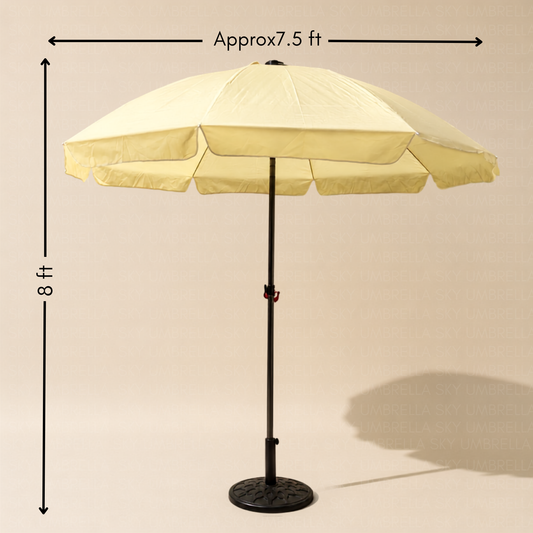
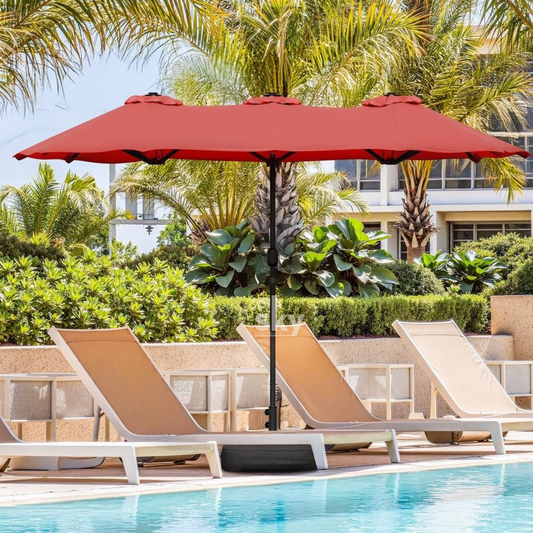
Not every role on a grounds or horticulture team is mobile. Nursery and garden-centre staff — the people potting saplings, running a retail counter, or managing a plant display area — are often standing in one spot for hours, which makes a fixed, ground-mounted umbrella a better investment than a wearable or handheld one. The Center Pole Garden Parasol Umbrella gives an 8 ft canopy in UV-resistant, water-resistant Oxford fabric over a powder-coated metal pole, with a revolving crank handle for easy opening — genuinely built for exactly this kind of fixed outdoor workstation, not adapted from a patio-furniture catalogue. Pair it with the 4-Leg Stand, since the parasol itself ships without a base, for a stable, freestanding setup that doesn't need digging into the ground.


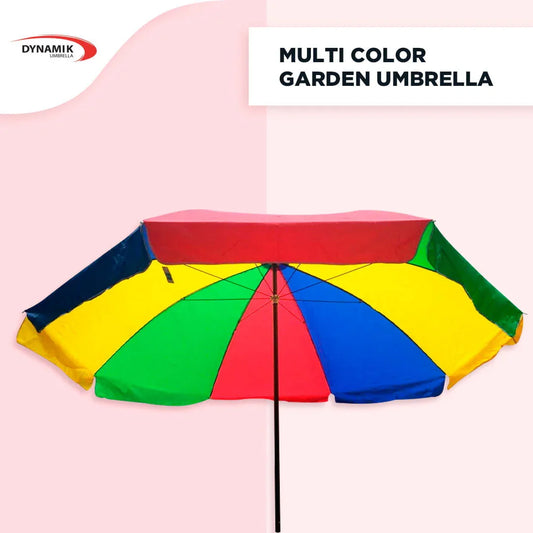
For a smaller nursery stall or a tighter budget, the 6 ft Multi Colour Garden Outdoor Umbrella (₹699, base sold separately) covers a single potting table or small display area at a fraction of the cost. And if your nursery or landscaping business is still working out what size base or stand pairs with which canopy, our dedicated Umbrella Stands & Bases guide walks through every option in the catalogue.
Rainwear for Continuous Outdoor Rounds
There's a point where no umbrella — wearable, clip-on, or fixed — is the right call, and that's continuous, hands-on monsoon work: clearing blocked drains after a downpour, planting or watering through steady rain, or any task that keeps staff moving and bending for hours at a stretch. That's rainsuit territory. The WeatherWise Leo RainSuit is built around water-resistant Hypora fabric with a PVC lining and seam-sealed construction, so water doesn't creep in at the stitching the way it does on cheaper rainwear, plus two secure pocket flaps for keys, a phone, or small tools. For a crew doing sustained outdoor work through the monsoon, one rainsuit per person does more real protective work than any umbrella, hands-free or otherwise. Our full Raincoat & Rain Suit buying guide compares every WeatherWise option if you're sizing a crew across different builds.

Buying Guide Checklist
Before placing a bulk or welfare-kit order for a landscaping or horticulture team, run the purchase against this checklist:
- Match the gear to the task, not the job title. The same person may need a hands-free cap umbrella for pruning and a clip-on umbrella for the walk back to the shed.
- Check the UV claim, not just the rain rating. For a role outdoors most of the year, a UV-blocking canopy is doing more daily work than a water-resistance spec most staff will use for only a few months.
- Rate for wind separately if the role works open ground. Golf courses, large lawns, and campus perimeters catch wind that a sheltered courtyard never will.
- Decide hands-free vs. handheld before you decide budget. A cheaper handheld umbrella that gets left in the shed because it's impractical is a wasted purchase regardless of price.
- Plan fixed shade separately from personal gear. A nursery counter or potting station needs a mounted parasol and stand, not an umbrella issued to an individual.
- Budget rainsuits for the hands-on monsoon-intensive roles. Don't try to stretch an umbrella budget to cover work that genuinely needs full-body rainwear.
- Think in welfare-kit tiers, not one-size-fits-all. Field staff, supervisors, and fixed-post nursery staff each warrant a different piece of kit at a different price point.
Comparison Table
| Product | Price | Best For | Hands-Free? | Primary Protection |
|---|---|---|---|---|
| Rainbow Hand Free Cap Umbrella | ₹250 | Pruning, weeding, planting | Yes (worn) | Sun & light rain |
| Compact 3Fold Travel Umbrella | ₹599 | Watering rounds, trolley work | Clips on when not in use | UV (95%) & rain, wind-resistant |
| Classic Premium Windproof Umbrella | ₹1,599 | Supervisors, open-ground walkthroughs | No | Windproof, heavy monsoon |
| Windproof Travel Umbrella | ₹699 | Daily dry-season sun protection | No | UV & wind-resistant |
| Center Pole Garden Parasol Umbrella | ₹3,499 | Nursery counters, potting stations | N/A — fixed | UV & water-resistant |
| 4-Leg Stand | ₹450 | Base for the parasol above | N/A — accessory | Stability |
| WeatherWise Leo RainSuit | ₹899 | Sustained hands-on monsoon work | Full body coverage | Seam-sealed rain protection |
Pros & Cons: Wearable vs. Clip-On vs. Full Rainsuit
Wearable hands-free umbrella
- Pro: true hands-free use for active tasks like pruning and planting.
- Pro: lowest cost per person, easy to issue across a large crew.
- Con: manual-open and scoped for sun/light rain only — not a monsoon-storm solution.
Clip-on compact umbrella
- Pro: travels with the person without occupying a hand until needed.
- Pro: auto open/close for quick one-handed deployment.
- Con: still needs to be unclipped and held once open, so it isn't truly hands-free mid-task.
Full rainsuit
- Pro: the only option that keeps both hands completely free while also covering the body in sustained rain.
- Pro: seam-sealed construction holds up to continuous exposure an umbrella can't match.
- Con: no sun-shade benefit on dry days — it's a rain-specific, not a year-round, solution.
Expert Tips for Welfare-Kit Planners
- Issue by task cluster, not by designation. Group staff by what they spend most of their day doing — hands-on planting, mobile rounds, fixed-post retail — and buy for that cluster, not a blanket "gardener" category.
- Keep a shed-side spare set. Hands-free cap umbrellas and compact clip-ons are inexpensive enough to keep two or three spares on-site for staff who forget theirs or whose canopy wears out mid-season.
- Dry before folding, every time. This matters more for daily-use field gear than for an umbrella used twice a week — a damp canopy folded and left in a bag or trolley compartment is the single fastest way to shorten its working life.
- Re-budget annually, not once. Field-use umbrellas issued to active landscaping staff see far more daily wear than an office umbrella and should be replaced on a shorter cycle, not treated as a one-time purchase.
- Don't skip the fixed-shade line item. It's easy to budget personal gear for mobile staff and forget that nursery counters and potting stations need their own mounted shade — a separate budget line, not an afterthought.
Illustrative Case Study: A Grounds-Maintenance Contractor's Rollout
The scenario below is an illustrative composite built from the realistic constraints landscaping and grounds-maintenance contractors face in India — not a specific named client.
Picture a mid-sized grounds-maintenance contractor managing landscaping for three corporate IT campuses on the outskirts of a major city, with a 40-person crew split across mobile planting-and-pruning teams, a smaller supervisory group doing daily walkthroughs, and two nursery staff running an on-site potting and plant-supply area for each campus. Under the old approach, the contractor issued a single type of folding umbrella to everyone — which mobile crew members routinely left behind because it got in the way of pruning shears and trowels, while supervisors complained it inverted on the exposed lawn stretches between buildings.
Splitting the order by task cluster instead — hands-free cap umbrellas for the planting-and-pruning teams, windproof straight umbrellas for supervisors walking open ground, and a mounted parasol-and-stand setup at each campus's potting station — addressed the actual friction points the old blanket order created, at a comparable total welfare-kit spend. The lesson generalises well beyond this one scenario: for a workforce whose hands are occupied most of the day, matching gear to task does more for adoption and daily use than upgrading to a more expensive version of the same handheld umbrella everyone was already ignoring.
Industry Applications
- Corporate campus landscaping contractors managing grounds for IT parks, business parks, and office campuses.
- Municipal parks & horticulture departments maintaining public gardens and green spaces.
- Golf courses & resort grounds teams, where greenskeeping crews work exposed, wind-prone fairways daily — see our Golf Umbrellas guide for the supervisor and guest-facing side of the same properties.
- Hotel & resort grounds and landscaping staff, a natural companion to the guest-facing teams covered in our Doorman & Valet guide.
- Nursery & garden-centre retail chains needing both personal gear for potting staff and fixed shade for sales counters.
- Botanical gardens & public green-space attractions with large horticulture staff working year-round.
- Housing-society (RWA) garden and landscaping staff — a direct companion piece to our RWA Security Guard Welfare-Kit guide, which covers the same property's gate and patrol staff.
- Real estate developers maintaining show-garden and landscaped common areas ahead of site visits — see our Real Estate Site-Visit Umbrellas guide.
Frequently Asked Questions
Is a hands-free cap umbrella actually durable enough for daily gardening work?
It's built for sun and light rain, with a metal-rib frame and foldable polyester canopy — genuinely durable for daily wear, but it isn't designed for heavy monsoon downpours or strong wind. Pair it with a rainsuit for the days when the weather turns serious.
What's the difference between a windproof umbrella and a regular one for outdoor staff?
A windproof umbrella uses more ribs (typically 16 versus 8–10 on a basic umbrella) and a frame engineered to flex rather than invert under gusts — important for anyone walking exposed ground like a golf course, campus lawn, or open car park, where wind is a bigger factor than it is in a sheltered courtyard.
Should nursery and garden-centre staff get umbrellas or a fixed parasol?
If the role is stationary — a potting bench, a sales counter, a display area — a mounted centre-pole parasol with a proper stand is almost always the better investment than issuing personal umbrellas, since it doesn't rely on someone holding it all day.
How many umbrellas should a landscaping welfare kit include per person?
Most contractors budget one primary piece of gear per task cluster per person (for example, one hands-free cap umbrella for a pruning-team member), plus two or three shared spares kept on-site for staff whose gear is damaged, lost, or still drying out.
Can one umbrella cover both sun and rain needs for this workforce?
Partially. Products with an explicit UV-blocking claim, like the Compact 3Fold Travel Umbrella's 95% UV rating, do double duty reasonably well. But for sustained heavy monsoon work, no umbrella replaces a proper rainsuit.
Do these products come with branding or customisation options for a contractor's logo?
Yes — bulk orders can be branded in line with the printing methods covered in our Custom Umbrella Printing Methods guide. Reach out via our Contact Us page with your crew size and task breakdown for a quote.
Conclusion
Gardening, landscaping and horticulture staff are among the most consistently overlooked outdoor workforces when it comes to proper gear — not because the need isn't real, but because the usual umbrella-buying logic (one product, issued to everyone) doesn't fit a job where hands are almost always occupied and the sun is a bigger daily factor than the rain. The fix isn't a single better umbrella. It's matching hands-free wearables, clip-on compacts, windproof straight umbrellas, fixed parasols, and proper rainsuits to what each part of the crew actually does — pruning, rounds, supervision, or a fixed counter — and budgeting each tier on its own terms.
Ready to outfit your landscaping, nursery, or grounds-maintenance team? Browse the full Garden Umbrella collection and Promotional Umbrella collection for bulk and branded options, or get in touch directly through our Corporate Umbrella Manufacturer page for a crew-size quote. You can also learn more about Sky Umbrella on our About Us page, or head to the Sky Umbrella homepage to explore the full catalogue.