Umbrella Stands & Bases: The Complete Buying Guide for Patio, Garden, Café & Resort Umbrellas (2026)
Walk into almost any hotel courtyard, café patio, or housing society garden in India after a windy monsoon evening and you'll usually find the same scene: the umbrella canopy is fine, but the base has skidded three feet across the tiles, or the whole thing has gone over sideways into a flower bed. In fifteen-plus years of fielding these calls, we've noticed something buyers rarely expect going in — the umbrella is almost never what fails first. The base is.
This guide exists because nobody writes about umbrella stands and bases on their own. Every buying guide talks about canopy size, fabric GSM, and pole material, and then treats the base as an afterthought line item — "base sold separately," in small print, at the very end. We're flipping that here: this is a dedicated, practical guide to choosing the right stand or base for a patio, garden, café, resort, or poolside umbrella, because getting this one decision wrong is the single most common reason outdoor umbrellas end up damaged, tipped over, or genuinely dangerous in a strong gust.

Table of Contents
- Why the Base Matters More Than the Umbrella
- Center-Pole and Side-Pole Umbrellas Need Completely Different Bases
- Types of Umbrella Stands and Bases, Explained
- Built-In Bases vs. Buying the Base Separately
- How Much Weight Do You Actually Need?
- Wind Safety and Liability, Not Just Aesthetics
- Buying Guide: Matching a Base to Your Use Case
- Comparison Table: Sky Umbrella's Stand and Base Options
- Pros and Cons of Each Base Type
- Industry Applications
- Expert Tips From the Warehouse Floor
- Illustrative Case Study: A Poolside Tip-Over That Wasn't the Umbrella's Fault
- Frequently Asked Questions
- Conclusion and Next Steps
Why the Base Matters More Than the Umbrella
An umbrella canopy is just fabric stretched over ribs — it has almost no weight of its own. Every bit of resistance to wind, every bit of stability when someone leans on the pole to adjust the tilt, and every bit of protection against a full tip-over onto a guest, a table, or a parked car comes from whatever is holding the pole to the ground. That's the base or stand, and it's doing more structural work than the umbrella itself.
This is exactly why we keep seeing the same support pattern from customers: a hotel or café buys a beautiful large-canopy umbrella, pairs it with whatever base happened to be lying around or the cheapest option at checkout, and then calls a few weeks later asking why it keeps toppling. The umbrella wasn't the problem. The base was undersized for the canopy, the pole type, or the wind exposure of the site.
We've built this guide around Sky Umbrella's own current stand and base lineup — a 4-leg folding stand, a heavy resin-style stand base, and two large-format umbrellas that already come bundled with their own base — so every recommendation here is tied to a real, purchasable product, not a generic "buy a heavy base" platitude.
Center-Pole and Side-Pole Umbrellas Need Completely Different Bases
Before choosing a base, you need to know which structural family your umbrella belongs to, because the physics is genuinely different between the two.
Center-pole umbrellas
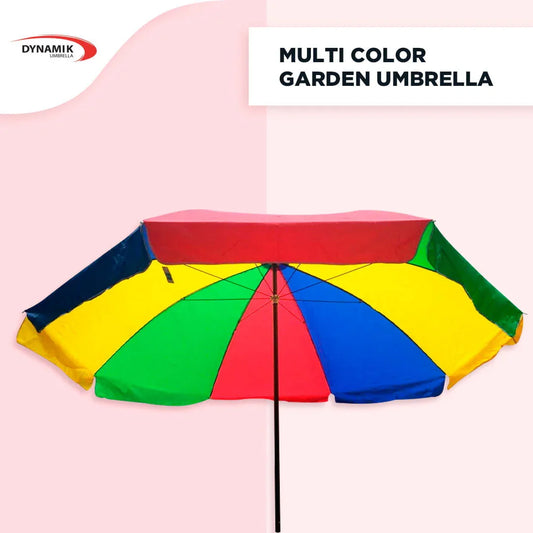
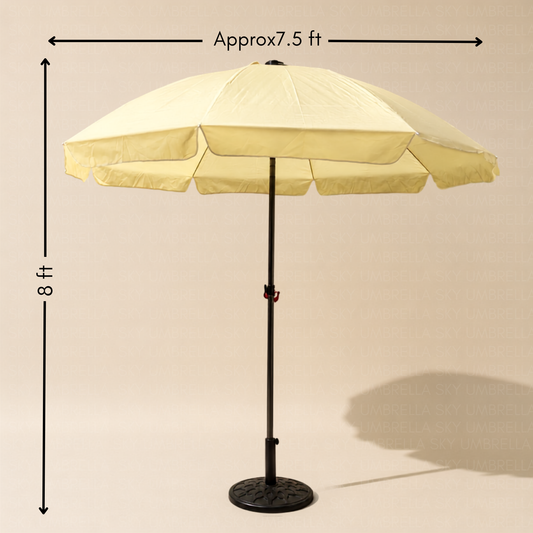
A center-pole (also called market-style) umbrella has its pole running straight down through the middle of the canopy, with the base sitting directly beneath it. The base's job here is mostly straightforward: hold the pole vertical and resist the umbrella being pushed sideways or lifted by wind gusting under the canopy. Our Center Pole Garden Parasol Umbrella and Double Canopy Center Pole Patio Umbrella are both this design — and both list their base as sold separately, which is standard practice across the market-umbrella category, not a Sky Umbrella quirk.

Side-pole (cantilever) umbrellas
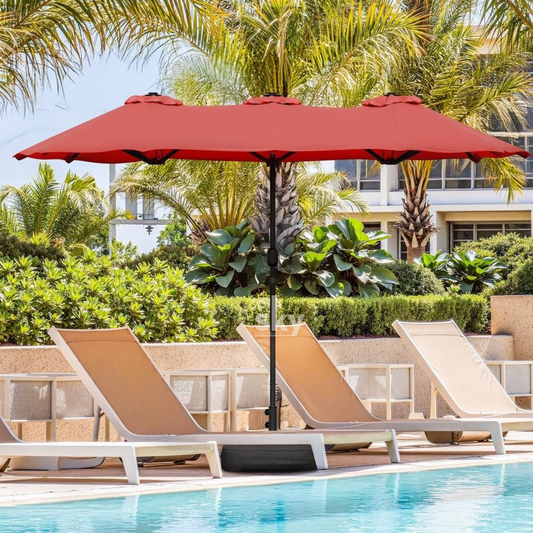
A side-pole or cantilever umbrella offsets the pole to one side, so the canopy floats over the seating area with no pole in the middle. This is the design most cafés, resorts, and poolside loungers actually want, because it leaves the table or lounger chairs completely unobstructed. The trade-off is that the base now has to resist a genuine lever-arm effect — the canopy's full weight and wind load are hanging out to one side of the pole, not centered above it, so the base has to be proportionally heavier and better engineered than a same-size center-pole base would need to be. Our Round Shape Side Pole Patio Umbrella and Square Shape Side Pole Patio Umbrella are both explicit in their own listings that the base is not included, precisely because side-pole bases are a heavier, more specialized purchase than a standard round weight.

We've written a full decision guide comparing the two designs for hospitality buyers specifically — see Side-Pole vs. Center-Pole Patio Umbrellas: A 2026 Decision Guide — if you haven't settled on the umbrella style itself yet. This article assumes you already have.
Types of Umbrella Stands and Bases, Explained
The 4-leg folding stand
The lightest and most portable option in the category is a folding, cross-shaped or 4-leg steel stand — Sky Umbrella's own 4-Leg Stand for Garden Outdoor Umbrella (₹450) is a good example. It's corrosion-resistant steel, folds flat for storage or transport, and mounts by tightening a screw around the pole rather than needing any tools. It's genuinely useful for a home garden, a beach day, a one-off event stall, or anywhere the umbrella will be moved often — but its light weight means it is not the right choice for a large canopy in an exposed, windy location. Think of it as the stand for a modest center-pole umbrella that mostly needs to stay upright on a calm day, not the anchor for a 10 ft canopy on an open rooftop.

The heavy resin/weighted base
One step up is a genuinely heavy, purpose-built base — our Heavy 8Kg Stand Base (₹1,200) is a resin base built specifically to stop a garden parasol "flying away on the first passing breeze," in the words of its own product listing. It's a universal, adjustable design that fits around a standard pole and is meant to anchor the umbrella to the ground rather than just hold it upright — the closest thing in the current catalogue to a dedicated ballast base. Only a handful of units are in stock at the time of writing, so if this is the base you need, don't leave the order for the last minute before monsoon season.

Built-in cantilever cross-bases
The heaviest-duty tier isn't a separate accessory at all — it's a base engineered as part of the umbrella purchase itself. More on that in the next section.
Built-In Bases vs. Buying the Base Separately
This is the buying decision most people get wrong, so it's worth stating plainly: on Sky Umbrella's site, some products include the base and some explicitly don't, and the difference is not always obvious from the price alone.

The 10 ft Thatch Side Pole Umbrella (₹30,000) is the clearest example of a fully bundled purchase: its own package list states "1 × Side Pole Frame" and "1 × Base Frame" alongside the canopy itself, so what you're buying is a complete, ready-to-install poolside or resort centerpiece with heavy-duty base support already engineered in. Similarly, the 10 Ft Double Top Deluxe Square Patio Umbrella (₹25,000) explicitly bundles "1 × Base Stand" in its package contents, and its full name even flags the "80 Litre Water Base" that gives the cantilever design its stability — a water-fillable base is a smart engineering choice for a large cantilever, since it lets the base ship lighter and then be weighted on-site with water rather than shipping 60-80 kg of dead resin or concrete across the country.
By contrast, both side-pole patio umbrellas (Round and Square shape, ₹7,500 each) and the Double Canopy Center Pole Patio Umbrella (₹3,000) are honest in their own listings that the base is a separate purchase. This isn't a flaw — it's actually the more flexible option for a buyer who already owns a compatible base, or who wants to choose a specific base weight rather than accept whatever the manufacturer bundled in. But if you're ordering one of these without already owning a base, budget for it as a real line item, not an afterthought: a Heavy 8Kg Stand Base at ₹1,200 or a 4-Leg Stand at ₹450 on top of the ₹7,500 umbrella price, depending on how much wind exposure the site actually has.
How Much Weight Do You Actually Need?
There's no single "right" ballast weight that applies to every umbrella — it depends on canopy size, pole design (center vs. side-pole), and how exposed the site is to wind. But the underlying physics is simple enough to reason about without needing an engineering degree, and it's worth understanding rather than just guessing:
A bigger canopy catches more wind, full stop — a 10 ft canopy needs meaningfully more anchoring than a 6 ft one in the same conditions. A side-pole (cantilever) design needs more base weight than a center-pole umbrella of the same canopy size, because the canopy's weight and wind load are acting through a lever arm offset from the pole rather than straight down through it — this is the same reason a cantilever crane needs a heavier counterweight than a straight vertical mast lifting the same load. And a genuinely exposed site — a rooftop, a coastal property, an open field with no windbreak — needs more ballast than a courtyard sheltered by walls or other buildings on most sides, even with an identical umbrella.
In practice, this is why Sky Umbrella's own bundled products scale the way they do: a modest ₹3,499 Center Pole Garden Parasol is a lighter-duty design that doesn't ship with a heavy base built in, while the ₹25,000-and-up cantilever umbrellas come with a purpose-engineered base (in one case a full 80-litre water reservoir) because an underweighted base on a large cantilever isn't a minor inconvenience — it's a real safety hazard. If you're at all unsure whether your intended base is heavy enough for your specific site, the safer default is to size up rather than accept the lightest option that technically fits the pole diameter.
Wind Safety and Liability, Not Just Aesthetics
For a home garden, a toppled umbrella is an annoyance. For a hotel, resort, restaurant, or café, it's a liability question — a heavy canopy and pole coming down on a guest, a table of food and drink, or a parked vehicle during a sudden gust is exactly the kind of incident that ends up in a guest complaint, an insurance claim, or worse. This is precisely why hospitality buyers researching wind-rated umbrellas should treat the base as inseparable from the wind rating of the umbrella itself — a windproof canopy on an undersized base is still an unsafe installation. We've covered the umbrella side of this in detail in Wind-Rated Patio Umbrellas for Mumbai and Coastal Properties; this guide is the base-side complement to that piece.
The practical rule for any commercial property: during genuinely strong wind, storms, or heavy rainfall, close and lower cantilever umbrellas rather than trusting the base to hold at full extension — this is stated as standard care guidance across our own patio umbrella listings, and it's the single cheapest risk-reduction step available, costing nothing beyond someone remembering to do it before a storm rolls in.
Buying Guide: Matching a Base to Your Use Case
Rather than a generic checklist, here's how we'd actually walk a customer through this decision by scenario:
A home garden or balcony, occasional use, sheltered site: a center-pole umbrella like the Center Pole Garden Parasol Umbrella paired with either the 4-Leg Stand (if you'll move it seasonally) or the Heavy 8Kg Stand Base (if it's staying put and you want real peace of mind) covers most residential needs.
A café or restaurant patio, open to foot traffic, needs to look tidy every day: side-pole umbrellas keep the seating area clear of a center pole, but budget properly for the Heavy 8Kg Stand Base per umbrella rather than trying to get away with the lightest option — a wobbling umbrella over a dining table is worse for the guest experience than no umbrella at all.
A resort, hotel pool deck, or large open lawn, genuinely exposed to wind: this is where the bundled, purpose-engineered options earn their higher price — the 10 ft Thatch Side Pole Umbrella or the 10 Ft Double Top Deluxe Square Patio Umbrella with its 80-litre water base are built as complete systems rather than umbrella-plus-generic-base, and that engineering is worth paying for at this scale. See our Poolside Umbrellas buying guide for the wider product context around this use case.
An event, stall, or beach outing, needs to be portable: the 4-Leg Stand's fold-flat, screw-tighten design is genuinely built for this — light enough to carry, quick enough to set up without tools. Our Best Umbrellas for the Beach in India guide covers portable base options for sand specifically, since a sand anchor behaves differently from a paved-surface base.
Comparison Table: Sky Umbrella's Stand and Base Options
| Product | Price | Best Suited To | Portability | Base Included? |
|---|---|---|---|---|
| 4-Leg Stand for Garden Outdoor Umbrella | ₹450 | Light center-pole umbrellas, occasional/portable use | High — folds flat | Sold separately (accessory) |
| Heavy 8Kg Stand Base | ₹1,200 | Garden parasols and side-pole umbrellas needing real anchoring | Low — meant to stay put | Sold separately (accessory) |
| Center Pole Garden Parasol Umbrella | ₹3,499 | Home gardens, sheltered patios | Moderate | Not included |
| Double Canopy Center Pole Patio Umbrella | ₹3,000 | Restaurants/cafés wanting extra shade coverage | Low once installed | Not included (stated on listing) |
| Round / Square Side Pole Patio Umbrella | ₹7,500 | Cafés, poolside loungers, unobstructed seating | Low once installed | Not included — pair with Heavy 8Kg Stand Base |
| 10 ft Thatch Side Pole Umbrella | ₹30,000 | Resorts, luxury poolside, tropical-theme installations | Very low — full installation | Included (side pole frame + base frame) |
| 10 Ft Double Top Deluxe Square Patio Umbrella | ₹25,000 | Large hospitality lawns, villas, farmhouses, exposed sites | Very low — full installation | Included (80-litre water base stand) |
Pros and Cons of Each Base Type
4-leg folding stand — pros: cheapest option, genuinely portable, no tools needed, works on grass, sand, or paving. Cons: not heavy enough for large canopies or exposed sites; not designed to be a permanent anchor.
Heavy weighted/resin base — pros: real anchoring weight, universal fit, low cost relative to what it protects. Cons: not portable once placed; still needs to be matched to canopy size rather than assumed sufficient for every umbrella.
Bundled/built-in base (as on the Thatch and Double Top Deluxe umbrellas) — pros: engineered specifically for that canopy and pole design, one purchase instead of two decisions, typically the heaviest and most stable option available. Cons: higher upfront cost, and the base isn't reusable with a different umbrella if you replace the canopy later.
Industry Applications
Hotels and resorts installing poolside or lawn umbrellas at scale should default to bundled, engineered bases like the Thatch Side Pole or Double Top Deluxe systems rather than mixing generic bases across dozens of units — consistency of anchoring matters as much as consistency of canopy colour when a property is being assessed for guest safety.
Cafés and restaurants with outdoor seating should budget the Heavy 8Kg Stand Base as a standard line item alongside any side-pole umbrella order, not an optional extra — a wobbling umbrella directly over a dining table is a worse look, and a worse liability, than a slightly heavier invoice.
Real estate developers and sales offices using umbrellas for site-visit shade or show-flat staging typically prioritise the lighter, more portable 4-Leg Stand paired with a center-pole design, since these installations are often temporary or need to be relocated as the site evolves.
Event and wedding decor rental businesses lean almost entirely on the 4-Leg Stand category for exactly the reason above — quick setup, quick breakdown, and no permanent installation footprint — while accepting that these aren't the right choice for multi-day exposed outdoor events in genuinely high wind.
Expert Tips From the Warehouse Floor
A base that fits the pole diameter isn't automatically the right base — fit and sufficiency are two different checks, and we get more returns from "it fit, but it still tipped" than from "it didn't fit at all."
Water-fillable bases like the one bundled with the Double Top Deluxe umbrella should always be filled fully before first use, and checked periodically for evaporation in hot weather — a half-empty water base performs like a much lighter one than its rated capacity suggests.
If you're pairing a side-pole umbrella with a separately purchased base, always confirm the base's pole-sleeve diameter against the umbrella's own pole spec before ordering — this is the single most common support query we get on side-pole umbrella orders.
Store folding 4-leg stands somewhere dry between seasons; they're corrosion-resistant, not corrosion-proof, and years of monsoon exposure without a dry off-season will shorten the life of any steel stand faster than the umbrella above it.
Illustrative Case Study: A Poolside Tip-Over That Wasn't the Umbrella's Fault
The following is an illustrative scenario built from patterns we see repeatedly across hospitality customers, not a specific named client.
A mid-size boutique resort orders eight side-pole patio umbrellas for its pool deck to give the cantilever design's unobstructed-seating benefit that loungers actually want. To save on the order, the property pairs each umbrella with the lightest available stand rather than a purpose-matched heavy base. Within the first strong pre-monsoon squall, three of the eight tip over — not because the umbrellas were defective, but because the base weight was never matched to a side-pole design's lever-arm wind load in the first place. The fix isn't a different umbrella; it's swapping in a heavier, purpose-built base per unit. This is exactly the base-vs-umbrella confusion this guide is written to prevent — the canopy gets blamed for a base-sizing decision made at checkout.
Frequently Asked Questions
Do all patio umbrellas need a separate base? No. Some, like the 10 ft Thatch Side Pole Umbrella and the 10 Ft Double Top Deluxe Square Patio Umbrella, include a purpose-built base in the package. Others, including both side-pole patio umbrellas and the Double Canopy Center Pole Patio Umbrella, explicitly state the base is sold separately — always check the individual product listing rather than assuming either way.
Can I use the same base for a center-pole and a side-pole umbrella? Only if the pole diameter matches and the base is rated heavy enough for the side-pole design's greater lever-arm load — a base sized correctly for a center-pole umbrella is often undersized once moved to a cantilever design of similar canopy size.
Is a water-fillable base as strong as a solid resin or concrete base of the same capacity? When fully filled, a water-fillable base like the one bundled with the Double Top Deluxe umbrella provides comparable ballast weight, with the practical advantage of shipping and handling much lighter empty — the trade-off is that it must be filled and periodically checked, unlike a solid base that can't lose capacity over time.
How do I know if my current base is too light? If the umbrella visibly rocks or the base itself shifts in moderate wind — not just an extreme storm — the base is undersized for that canopy and site. Waiting for a genuinely strong gust to find out is the expensive way to learn this.
What's the cheapest way to make an existing umbrella safer without replacing it? Pairing it with a Heavy 8Kg Stand Base is usually the most cost-effective single upgrade available, short of replacing the umbrella itself with a bundled system.
Do folding 4-leg stands work on sand? Yes, per the product's own listing, which explicitly lists beaches among its intended surfaces — but a folding stand on sand still benefits from being pushed in as deep as possible rather than just resting on the surface.
Conclusion and Next Steps
The base is not the boring part of an umbrella purchase — it's the part that determines whether the umbrella you bought for shade and branding stays upright through the season it actually needs to perform in. Match the base to the pole design (center vs. side-pole), size it to the canopy and the site's real wind exposure rather than the cheapest option that technically fits, and treat a bundled, purpose-engineered system as the right call once the canopy gets large or the site gets exposed.
If you're placing a bulk order for a hotel, resort, café chain, or corporate campus and want help matching bases to umbrellas across a whole property rather than unit by unit, our team can walk through the site conditions with you directly — visit our Corporate Umbrella Manufacturer page or contact us for a bulk quote. Browse the full range, including every stand and base covered here, in our Garden Umbrella collection, or head back to the Sky Umbrella homepage to explore the rest of the catalogue. You can also read more about us on our About Us page.