Side-Pole vs. Center-Pole Patio Umbrellas: A 2026 Decision Guide for Indian Hospitality Buyers
Share
Walk into any new rooftop bar, hotel pool deck, or cafe courtyard being commissioned in India this season and you will hear the same procurement debate: should we go with classic center-pole patio umbrellas, or invest in side-pole (cantilever) units? It sounds like an aesthetic call. It is not. The decision shapes table layouts, wind behaviour during the monsoon, replacement cycles, and your per-cover cost for the next three to five years.
At Sky Umbrella, our Mumbai factory ships both formats pan-India every week. This guide gives procurement teams, F&B heads, and facility managers a structured way to choose between them — and what to specify so the umbrella you order actually performs.
The real question is not "which looks better"
Pole position is a downstream decision. The upstream question is: where does the shade need to land, and what is sitting underneath it? A four-top dining table in a sheltered courtyard has very different requirements from a pool lounger on an exposed terrace. Once you frame it that way, the answer usually picks itself.
Three variables drive the call: obstruction tolerance, wind exposure, and repositioning frequency. Lock those three down and the rest is finishes.
Center-pole patio umbrellas: when the geometry works
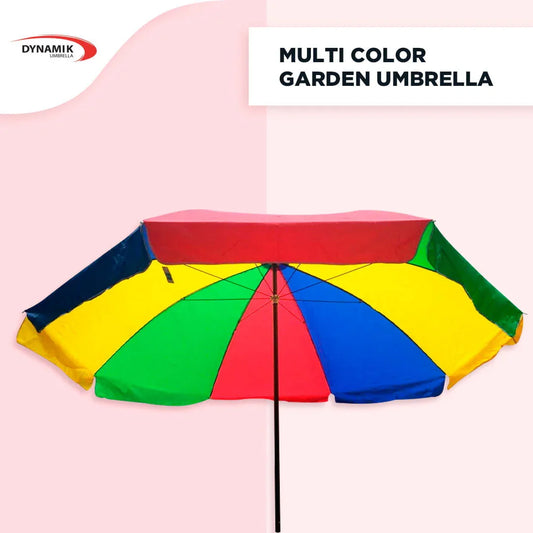
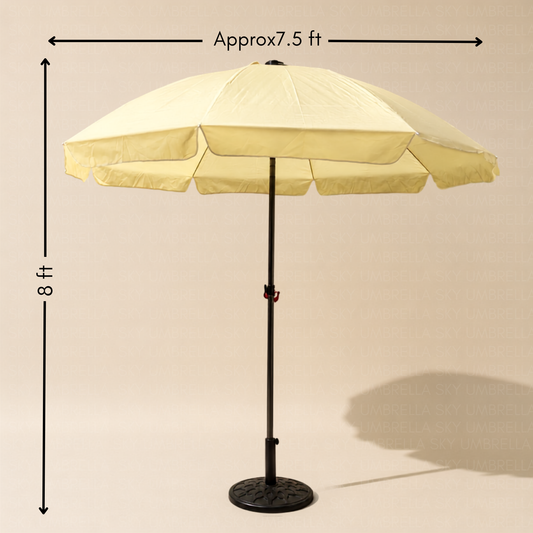
The classic center-pole format is the workhorse of Indian hospitality. The mast runs through the table cut-out, the canopy sits symmetrically overhead, and a weighted base or in-ground sleeve holds it down. Diameters between 2.4 and 3.0 metres are the most ordered sizes for restaurants; resorts commonly go up to 3.5 metres.
Where center-pole wins
- Fixed table layouts. If every table has a built-in cut-out (or you can drill one), the pole disappears into the table line and shade coverage is even.
- Wind stability. Vertical load down a single straight mast into a heavy base is mechanically simpler. With a good vent cap and quality ribs, a center-pole umbrella handles gusts better than a cantilever of the same canopy size.
- Lower unit cost. Fewer moving parts. A 2.4 m commercial-grade center-pole umbrella from a Mumbai manufacturer typically lands in the Rs. 2,800 to Rs. 4,500 range; a 3.0 m unit between Rs. 4,200 and Rs. 6,500 depending on fabric and frame.
- Easy crank or pulley operation. Staff can open and close them quickly during the monsoon when squalls roll in without warning.
Where center-pole creates problems
- If your seating is built-in (banquettes, sunken lounges, daybeds), a center pole is in the way.
- Around swimming pools, you cannot put a base where the deck does not allow it. Drilling sleeves into wet decks is messy and warranty-voiding for many flooring vendors.
- For multi-table coverage, you end up with a forest of poles. It looks cluttered and costs more in bases.
Side-pole (cantilever) patio umbrellas: the case for offset shade
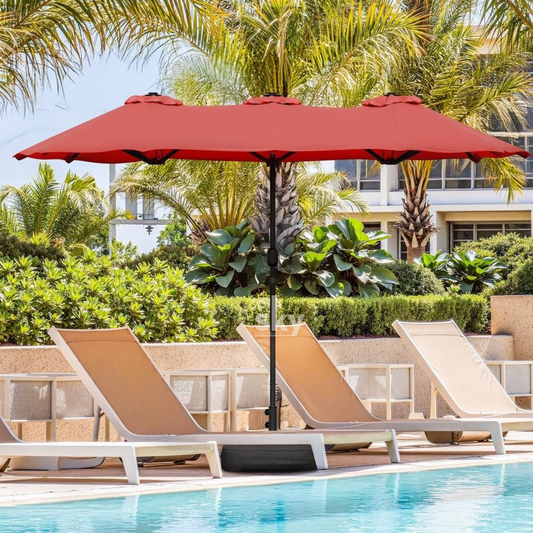
A cantilever umbrella stands the pole outside the seating area and uses an arm to suspend the canopy overhead. The base is heavier (often 60 to 120 kg of cross weights or concrete-filled trays) because it has to counter the moment created by the offset canopy.
Where side-pole wins
- Pool decks and lounges. The pole stays clear of the water and the canopy floats over loungers or sun beds.
- Built-in seating and sunken lounges. No need to design tables around a mast.
- Repositionable shade. Most cantilever models rotate 360 degrees and tilt; staff can chase the sun without moving the base.
- Large coverage from a single unit. A 3.0 to 4.0 m cantilever can shade a four to six-seater easily, reducing the number of bases on the floor.
Trade-offs to know before you order
- Wind sensitivity. The offset arm acts as a lever. Even rated cantilevers should be closed and secured when gusts cross 35–40 km/h. For Mumbai's pre-monsoon squalls and Chennai's coastal lines, this matters.
- Higher initial cost. A commercial cantilever umbrella in the 3.0 to 3.5 m range typically runs Rs. 6,500 to Rs. 9,000 from an Indian manufacturer. The base alone can add Rs. 2,500 to Rs. 4,500.
- Footprint. The base is large. In tight cafe courtyards, you may lose a cover or two of seating to accommodate it.
- Maintenance. More joints, pivots, and a crank gearbox. Plan for a service check every monsoon.
Spec sheet: what to confirm with your supplier
Whichever format you choose, do not sign the PO until your supplier confirms these in writing. We see procurement teams skip this and pay for it in year two.
- Fabric grade and UPF rating. Insist on 220–280 GSM solution-dyed polyester or acrylic for outdoor commercial use. A UPF 50+ rating with a written colour-fastness commitment of at least 1,000 hours UV exposure is reasonable.
- Frame material and gauge. Powder-coated steel is fine for sheltered courtyards. Aluminium with fiberglass ribs is better for coastal and high-wind sites — it does not rust and the ribs flex instead of snapping.
- Vent cap or double-tier canopy. Non-negotiable for any site that sees monsoon winds. A vent reduces uplift dramatically.
- Base weight specification. Get the minimum base weight in writing. A 3.0 m cantilever needs at least 80–90 kg of base; anything less is a liability claim waiting to happen.
- Replacement canopy availability. The frame should outlast the fabric. Confirm that you can reorder just the canopy in your custom colour for at least three years.
- Branding placement. If you are putting your hotel or restaurant logo on the valance, confirm print method (screen for solid colours, sublimation for full-colour artwork) and minimum order quantity.
Pricing realities for Indian buyers in 2026
For a 20-cover hotel pool deck looking at side-pole units, budget Rs. 9,000 to Rs. 13,500 per umbrella all-in (umbrella plus base plus delivery to most metros). For a 50-table restaurant courtyard using 2.4 m center-pole umbrellas, you should land between Rs. 3,200 and Rs. 5,200 per umbrella including a 25 kg base. Bulk orders of 25 units and above typically attract 8–15% off list, and we extend a further discount on logo orders that lock in by 30 June for monsoon delivery — use code MONSOON10 when you enquire.
If your interior designer has quoted imported European cantilevers at Rs. 35,000 to Rs. 80,000, ask them why. For most Indian commercial sites, a well-built Mumbai-manufactured unit performs at a fraction of the cost — and the replacement canopy is 24 hours away, not three months.
A simple decision rule for procurement teams
If your seating layout allows a pole through the centre, go center-pole. You will save 30–50% per cover and get better wind behaviour. If the seating is built-in, around a pool, or you need flexible coverage that follows the sun, go cantilever and budget properly for the base. Mixing both across a property is normal — restaurants center-pole, pool deck cantilever, banquet lawn either depending on layout.
What you should never do is buy retail-grade umbrellas for a commercial site. They look identical at the showroom and fail in their first monsoon. The hidden cost of replacing 40 cheap umbrellas mid-season — plus the guest-experience hit — dwarfs the saving.
Sky Umbrella manufactures both center-pole and cantilever patio umbrellas at our Mumbai facility and ships pan-India with structured trade pricing for hospitality, real estate, and corporate buyers. If you are scoping a property opening, a refresh, or a multi-site rollout, our team can help you spec the right format before you commit. See our garden & patio umbrella collection for current commercial models, or visit the corporate umbrella manufacturer page to start a bulk enquiry.
Talk to Sky Umbrella about your patio umbrella requirement
Phone: +91 7021378548
Email: skyumbrellamumbai@gmail.com
Corporate enquiries: skyumbrella.co/pages/contactus
Monsoon offer: Use code MONSOON10 on bulk orders confirmed before 30 June 2026.
Mumbai-manufactured. Hospitality-grade. Delivered across India.