Branded Umbrellas for Rural Marketing & Farmer Outreach in India (2026): A Kisan Mela Gifting Guide

Every year, as the pre-monsoon sales cycle kicks off, hundreds of FMCG majors, seed companies, agrochemical distributors, rural banks and microfinance institutions spend their entire quarter's below-the-line (BTL) budget on the same three items: caps, calendars and cotton bags. Almost none of them ask the one question that actually drives recall in rural India — what does the farmer still own, and use, three months after the mela is over?
Across more than 35 years of umbrella manufacturing experience — Sky Umbrella carries forward the manufacturing discipline of Classic Umbrella, founded in 1990 — we've watched this exact gap play out on the ground. A rural marketing team spends ₹8–10 lakh on a district-level activation, hands out 5,000 printed caps, and by the next haat day half of them are gone — lost in a field, swapped for a bidi, or simply left at home because a cap isn't something a farmer reaches for on a working day. An umbrella is. It goes into the bullock cart, it sits by the tubewell pump house, it rides on the tractor. That's the entire case for this article: branded umbrellas are one of the few rural giveaways with genuine, repeated, weather-driven utility — which is exactly what turns a one-time handout into months of unpaid brand exposure.
This guide is written for the people who actually run these campaigns: rural marketing managers at FMCG and agri-input companies, brand activation agencies that service kisan melas and van campaigns, microfinance and rural banking teams, and government or NGO outreach programmes. We'll walk through why umbrellas outperform the usual giveaways, what budget tier to pick for which audience, how to design for a market where literacy and purchasing power vary widely, and how to actually execute distribution at haats, melas and village-level camps without the stock running out halfway through the route.
Table of Contents
- Why Rural Marketing Still Leans on Physical Giveaways
- Who Actually Runs These Campaigns
- Umbrellas vs. Other Rural Giveaways
- Budget Tiers for Village-Level Gifting
- Designing for Rural Reach
- Execution: Haats, Melas & Van Campaigns
- Case Study: A District-Level Kharif Activation
- Pros & Cons of Umbrella-Led Activation
- Buying Guide: What to Specify
- Industry Applications Beyond Agri-Input
- Expert Tips From the Field
- Frequently Asked Questions
- Conclusion
- Call to Action
Why Rural Marketing Still Leans on Physical Giveaways
Rural India isn't a smaller version of urban India's marketing funnel — it runs on a completely different media mix. Doordarshan and radio jingles still have real reach, but the moment that actually converts intent into trial is still, overwhelmingly, a physical one: a van campaign stopping at a haat, a krishi vigyan kendra (KVK) demonstration plot, a seed dealer's counter, or a gram panchayat meeting. Digital ad spend is rising fast in Tier 3–4 towns, but for the actual last-mile village — where data connectivity is patchy and WhatsApp forwards compete with dozens of other messages — a product that physically travels home with the farmer still beats a banner ad that disappears when the phone screen locks.
That's the context branded umbrellas sit in. They're not a nostalgia play — they're one of the few SKUs that combine three things a rural BTL budget actually needs: a landed cost low enough for five-figure unit volumes, a use case tied directly to the monsoon and the punishing pre-monsoon heat that most of rural India works through outdoors, and a canopy surface big enough to carry a logo, a toll-free number, or a scheme name that stays legible from ten feet away — which matters when your real audience is everyone who sees that umbrella in the field, not just the farmer who was handed it.
Who Actually Runs These Campaigns
Four kinds of organisations account for most of the branded-umbrella demand we see out of rural activation budgets, and each one buys slightly differently.
FMCG, Seed & Agrochemical Companies
Seed companies, fertiliser brands and crop-protection (pesticide/herbicide) companies run the largest volumes, usually timed to the sowing calendar — Kharif-season pushes from April through June, and a smaller Rabi-season wave from October. Their umbrellas typically carry a single product name, a helpline number and a QR code to a WhatsApp agronomy helpline, distributed free with a minimum purchase of seed or fertiliser bags, or as a "bumper gift" at a dealer meet.
Rural Banking, NBFCs & Microfinance
Microfinance institutions (MFIs), regional rural banks (RRBs) and NBFC gold-loan or tractor-loan companies use umbrellas as a loyalty and onboarding gift for self-help group (SHG) members and new borrowers, often at the same camp where loan disbursement or a financial-literacy session happens. Unlike FMCG volumes, these runs tend to be smaller (500–3,000 units) but repeat quarterly, which makes a reliable reorder relationship more valuable than the lowest unit price.
Government Schemes, Cooperatives & NGO Outreach
Soil Health Card camps, PM-KISAN awareness drives, dairy cooperatives (the Amul/Nandini model of federated village societies) and health-and-sanitation NGOs all run a version of the same playbook — gather farmers at a central point, deliver information, hand out something useful enough that it gets kept. Umbrellas here usually carry a scheme logo plus a toll-free helpline rather than a brand, and procurement is frequently routed through a government e-Marketplace (GeM) tender or a direct empanelled-vendor purchase order, so documentation and GST compliance matter as much as price.
Rural Marketing & BTL Agencies
Agencies that run van campaigns, haat activations and dealer-meet logistics for the brands above are usually the ones actually placing the order — they need a vendor who can quote fast, hold a consistent print quality across a 10,000+ unit run, and ship in batches that match a district-by-district rollout rather than one single delivery.
Why Umbrellas Beat the Usual Rural Giveaway Line-Up
Caps, calendars, keychains and cotton bags still dominate rural BTL kits mostly out of habit, not performance. Here's how they actually compare on the things that matter for a rural campaign — cost per unit, how long the item survives in the field, and how much branding real estate it carries.
| Giveaway | Typical bulk cost | Field lifespan | Branding surface | Weather utility |
|---|---|---|---|---|
| Printed cap | ₹35–₹70 | 2–4 months (fades, gets lost) | Small (front panel) | None against rain; some sun relief |
| Wall calendar | ₹15–₹40 | 12 months, but indoors only | Large but static | None |
| Cotton tote bag | ₹25–₹60 | 1–3 months (tears, gets repurposed) | Medium | None |
| Steel keychain | ₹10–₹20 | 6+ months but near-invisible | Tiny | None |
| 2-Fold Promotional Umbrella (27") | ₹90–₹190 at bulk tiers | 1–2 monsoon seasons of daily outdoor use | Large — full canopy, 8 panels | Direct: rain and peak-summer sun, the two conditions rural outdoor work happens in |
The honest trade-off is cost: a cap or keychain will always be cheaper per piece than an umbrella. But cost-per-impression is the number that matters for a BTL budget, and an umbrella that survives a full monsoon in daily use at a farm gate, a tractor seat or a vegetable cart delivers weeks of outdoor visibility a cap simply can't match once its colour fades. For a channel that already struggles with the "we handed out 5,000 units but can't measure what any of it did" problem, an item that's still physically in use when your next quarter's campaign rolls through the same district is worth the extra ₹100–150 per unit.
Budget Tiers for Village-Level Gifting
Not every recipient at a rural activation needs — or should get — the same umbrella. The most cost-efficient campaigns we've seen tier their gifting, matching unit cost to the recipient's role in the buying decision.
| Tier | Who it's for | Recommended product | Indicative price |
|---|---|---|---|
| Mass distribution | Every farmer/attendee at a haat, mela or van stop | Promotional 2-Fold Umbrella | From ₹90/unit at bulk volumes |
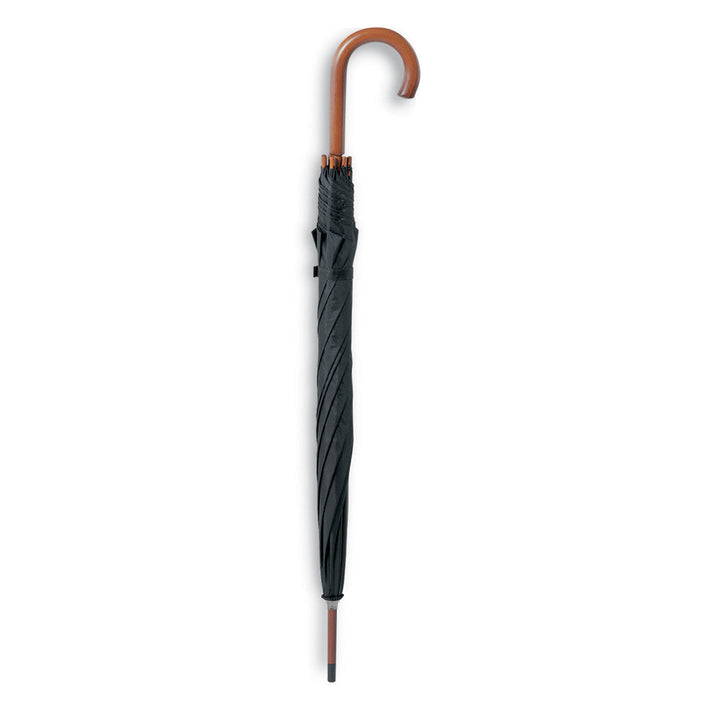
| Core giveaway | Confirmed buyers, SHG members, loan recipients | 2 Fold Promotional Umbrella – 27" | From ₹190/unit |
| Field-worker tier | Farmers, labourers who need hands free for carrying produce or tools | Rainbow Hand Free Cap Umbrella | ₹250/unit |
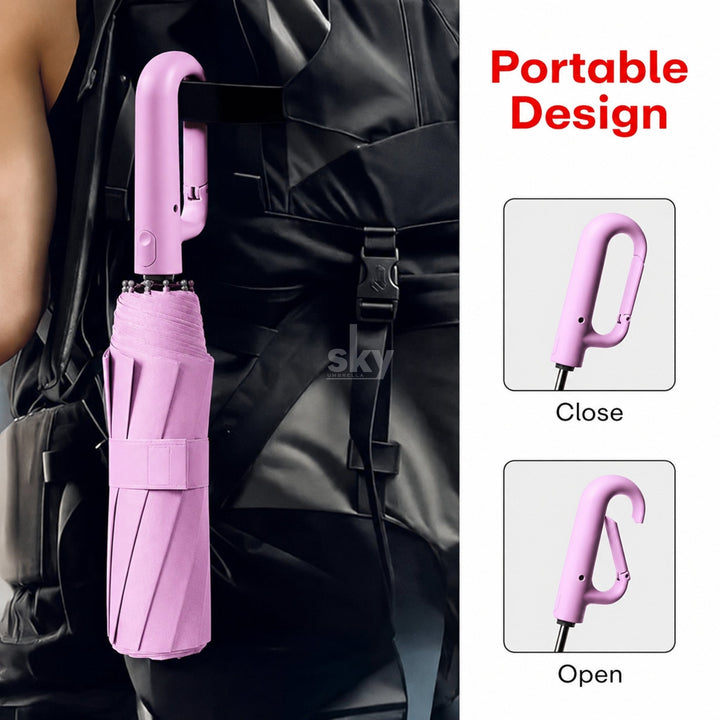
| Dealer / retailer tier | Seed dealers, agri-input retailers, village-level distributors | Promotional Golf Umbrella or 3 Fold Auto Open & Close Umbrella | ₹190–₹250/unit |
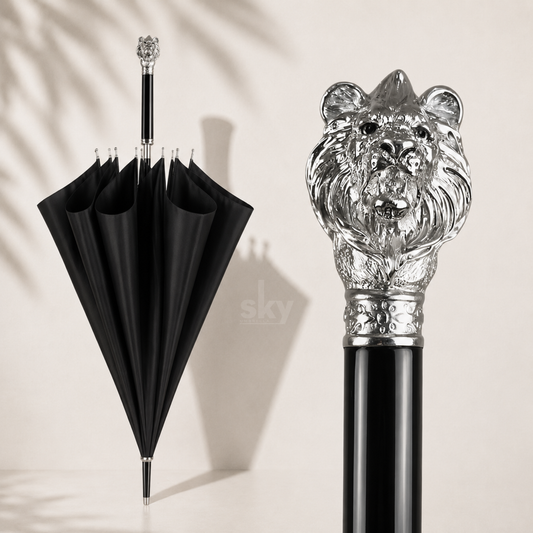
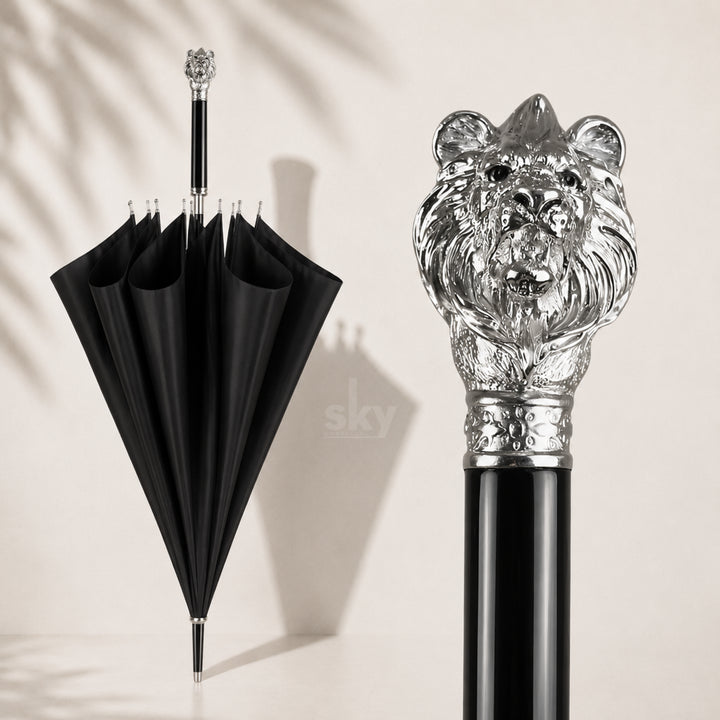
| VIP / sarpanch / influencer tier | Gram panchayat heads, lead farmers, KVK officers, media | 27 x 8 Lion Handle Umbrella or Double Layer Golf Umbrella | ₹350–₹450/unit |

For the field-worker tier, the Rainbow Hand Free Cap Umbrella deserves a specific callout: it was designed as a hands-free, head-worn umbrella, which is a genuinely different use case from a handheld one. A farmer carrying a basket of produce to market, pulling a cart, or working with both hands on a tool can't hold an umbrella — this is the one item in the line-up built for exactly that situation.

Designing for Rural Reach: What Actually Works on the Canopy
Corporate umbrella design for a city audience and umbrella design for a village audience are not the same brief. A few things we'd flag before you send artwork to print:
- Legibility beats cleverness. A single bold wordmark and a toll-free number, printed large on two or more panels, will out-recall a clever tagline that only reads well up close. Your real audience is everyone who sees the umbrella from a distance at a haat, not just the person holding it.
- Keep text bilingual, visuals pictorial. Pair your brand name in English with the local script (Hindi, Marathi, Gujarati, Punjabi, Telugu, depending on the state), and lean on a recognisable product pack-shot or icon rather than dense text — literacy rates vary widely across rural India, and an icon travels better than a paragraph.
- QR codes work, but only with a reason to scan. A QR linking to an agronomy WhatsApp helpline, a scheme-eligibility checker, or a dealer locator gets used. A QR that just opens your homepage gets ignored. If smartphone penetration in your target district is low, skip the QR and print the helpline number instead.
- One strong colour, consistently used. Many agri brands already own a colour in the farmer's mind (a seed company's packet colour, a fertiliser brand's drum colour) — matching the umbrella canopy to that colour does more for instant recognition at a crowded haat than any amount of extra text.
- Print method follows volume. Screen printing is the standard, cost-effective choice at five-figure volumes with one or two colours; for smaller runs with more detail, digital or heat-transfer printing makes sense. (We cover this trade-off in full in our custom umbrella printing methods guide.)
Execution: Haats, Kisan Melas & Van Campaign Logistics
The design and the product choice only pay off if the distribution plan actually gets umbrellas into the right hands without the route running dry halfway through. A few operational patterns that consistently work:
Time it to the sowing calendar, not the financial quarter
The single biggest planning mistake we see is a brand locking its activation budget to a financial-quarter cycle instead of the actual agricultural one. Kharif-linked campaigns land best from mid-April through June, just ahead of the south-west monsoon and sowing — exactly when a farmer is both outdoors the most and most receptive to a seed, fertiliser or crop-protection pitch. A Rabi-linked push works better in October, ahead of the winter sowing window.
Stock by route, not by district total
A district-level total looks fine on a spreadsheet and then runs out at the third of eight planned haat stops, because footfall at a Monday haat is never evenly split across a week's route. Break the unit allocation down per stop based on last season's actual footfall, keep a 10–15% floating reserve, and have your agency carry it rather than warehouse it centrally — a van that runs dry at stop four with four stops left is a worse outcome than a slightly uneven distribution.
Pair the giveaway with a reason to stay at the stall
An umbrella handed out at the entrance gets taken and the person moves on. An umbrella handed out after a product demonstration, a soil-test reading, or a loan-eligibility check keeps people at the stall long enough for the actual sales message to land — and it reframes the umbrella as something earned rather than just given away, which measurably improves how it's valued and used afterwards.

Case Study: A District-Level Kharif Activation
The following is an illustrative scenario built from patterns we see repeatedly across agri-input rural campaigns, not a single named client — it's shared to walk through the decision-making, not as a verified client testimonial.
A mid-sized agrochemical distributor covering 40 villages across two districts in Madhya Pradesh planned a pre-Kharif activation with a ₹6 lakh BTL budget split across 12 haat stops over five weeks. Their previous year's run had handed out plain cotton caps and seen almost no measurable recall when the sales team returned for the actual order-booking visit six weeks later.
For the revised run, the team tiered the gifting: a mass tier of 2,000 units of the Promotional 2-Fold Umbrella (27") for every attendee who sat through the 10-minute product demonstration, and a dealer tier of 150 units of the Promotional Golf Umbrella for the retail counters that agreed to display point-of-sale material through the season. Canopy art carried the product name in Hindi and English, a single bold colour matching the product's packet, and a dealer-locator phone number.
The result the sales team reported back: dealers specifically mentioned the umbrella in conversation when the follow-up team returned — something that had never happened with caps — and several retail counters asked to be stocked with extra units to hand out themselves, turning the giveaway into a self-sustaining distribution channel for the rest of the season.
Pros & Cons of Umbrella-Led Rural Activation
| Pros | Cons |
|---|---|
| Weather-driven utility means genuine, repeated use rather than a one-time novelty | Higher per-unit cost than caps, keychains or calendars |
| Large canopy surface carries far more branding than small giveaways | Bulkier to transport and distribute than flat items like calendars |
| Field lifespan of a full monsoon (or more) keeps the brand visible for months | Needs a minimum lead time for bulk printing — not a same-week order |
| Works for both mass distribution and VIP/dealer-tier gifting from one product family | Quality variance between vendors is high; a cheap, poorly-ribbed umbrella can fail in the first storm and hurt the brand instead of helping it |
| Doubles as practical welfare support for an outdoor-working audience | Design needs rural-specific thinking (language, literacy, visibility) — a straight city-campaign artwork file rarely transfers well |
Buying Guide: What to Specify Before You Order
A few specifications matter more for rural, outdoor-heavy use than they do for a typical urban corporate order:
- Rib count and canopy size. Open-field use means more wind exposure than a city pavement. An 8-rib, 27" canopy is the sweet spot for mass distribution — enough wind resistance for field use without pushing the unit cost into dealer-tier territory. (Our rib count guide breaks down what changes at 6, 10 and 16 ribs.)
- UV exposure, not just rain. Much of the pre-monsoon distribution window is peak summer heat, not rain — the canopy is doing as much work blocking sun as it will later do blocking rain. Ask your vendor for the fabric's UV-blocking performance, not just its waterproof rating.
- Fold type for distribution speed. A simple 2-fold, manual-open umbrella is faster to hand out, cheaper to print at volume, and easier to replace than an automatic-open mechanism — save automatic-open for the dealer and VIP tiers where the extra cost is justified by the smaller unit count.
- Packaging for transport. Loose umbrellas thrown into a van get damaged in transit. Ask for polybag or sleeve packaging per unit and carton packing by route-stop quantity, not one bulk crate for the whole district.
- Lead time against your sowing calendar. Work backwards from your first haat date — bulk screen-printed orders typically need several weeks between artwork approval and dispatch, and that window gets tighter in the weeks immediately before monsoon when every agri brand is placing the same order.
Industry Applications Beyond Agri-Input
While seed, fertiliser and crop-protection companies drive the largest single-campaign volumes, the same rural-activation playbook applies wherever an organisation needs to reach an outdoor, dispersed, village-level audience: dairy cooperatives running village-society meetings, two-wheeler and tractor dealerships running test-drive camps at agricultural fairs, telecom companies activating SIM and recharge camps in unconnected villages, insurance companies explaining crop-insurance (PMFBY) enrolment at gram sabha meetings, and NGOs running health, sanitation or literacy outreach where a branded umbrella carrying a helpline number serves the campaign's own awareness goal as much as any sponsor's.


Expert Tips From the Field
- Order one tier's sample before committing the full budget. A sample run lets your field team pressure-test the canopy and rib quality in actual outdoor conditions before 5,000 units are printed with the wrong spec.
- Brief your agency on tiering, not just total units. "10,000 umbrellas" as a brief invites a single generic SKU. "8,500 mass-tier + 1,200 dealer-tier + 300 VIP-tier" gets you a campaign that actually matches recipient value to unit cost.
- Keep one SKU per tier across the whole district. Switching canopy colours or sizes mid-route to use up odd stock creates confusion about which umbrella belongs to which campaign message — consistency matters more than using up leftover units.
- Build the reorder into next season's planning now. Rural campaigns that treat each season as a one-off miss the compounding recall benefit of the same colour and branding showing up again the following year.
Frequently Asked Questions
What's the minimum order quantity for branded rural-campaign umbrellas?
MOQs vary by print method and SKU, but screen-printed bulk orders on our mass-tier products are typically workable from a few hundred units upward, scaling to five-figure volumes for district-wide campaigns. See our full MOQ guide for exact tiers by product.
How far ahead of the campaign should we place the order?
Place artwork-approved bulk orders at least 4–6 weeks before your first distribution date, and earlier if your window falls in the peak pre-monsoon weeks (April–May) when demand across agri-input brands spikes simultaneously.
Can the printing include regional-language text?
Yes — screen, digital and heat-transfer printing all support regional scripts. Share your artwork in the target language upfront so the print team can confirm font legibility at the panel size you're ordering.
Can we procure through a government tender or GeM portal for a scheme-based campaign?
Yes, government and cooperative buyers routinely procure this way. If your activation is scheme-linked, our government tender procurement guide covers documentation and the bidding process in detail.
Will a low-cost mass-tier umbrella survive a full monsoon season?
A well-made 8-rib umbrella with a properly stitched canopy will typically see a farmer through a full monsoon season of daily use. The honest caveat: at the very lowest price points across the market generally, rib and seam quality varies a lot between vendors — ask for a physical sample before committing to a large run, regardless of who you order from.
Can umbrellas be packed per village or per haat-stop for distribution?
Yes — most B2B umbrella suppliers, including us, can carton-pack by whatever breakdown your route plan needs (per village, per stop, per tier) rather than shipping one undivided bulk lot, provided you share the breakdown at the time of order.
Conclusion
Rural marketing budgets are under more scrutiny than ever, and "we distributed 5,000 giveaways" is no longer a good enough answer to what a campaign actually achieved. A branded umbrella, tiered correctly and designed for the audience that's actually receiving it, is one of the few physical giveaways that keeps doing its job — carrying your brand into the field, literally — long after the mela tent has come down. Get the tiering, the design and the timing right, and the same umbrella that protected a farmer through one monsoon season becomes the reason your sales team gets remembered at the next one.
Call to Action
Planning a kisan mela, van campaign or village-level activation for the next sowing season? Talk to Sky Umbrella's corporate team about tiered bulk pricing, regional-language printing and route-based packaging, browse the full Promotional Umbrella collection, or contact us directly for a sample and a quote matched to your district rollout plan. Learn more about who we are on our About Us page, or head back to the Sky Umbrella homepage to explore our full range.